

Law of Moses
 4
6.6
4
6.6

- noun
- /lɔː ʌv ˈmoʊzɪz/
- The Law of Moses outlines many of the commandments that form the foundation of Jewish religious practice.
Loading YouTube…
Watch on YouTubeThey like knock a wall down and inside they find a scroll the, the, the Turat Moshe, the laws of Moses.
- They like knock a wall down and inside they find a scroll the, the, the Turat Moshe, the laws of Moses.
Examples
-
Yet her father and mother had taught her from birth that Christ had shed his blood as an atonement for the sins of the world, that the law of Moses had been fulfilled in him, and that animal sacrifices were no longer needed.
Fiction book (1998) -
He'd never taught his sons the history of the Israelites, the Law of Moses, the way of righteousness.
Fiction book (2001) -
That was no fair trial according to the laws of Moses.
-
According to the law of Moses and Israel.
-
The law of Moses commands us to stone her.
-
Peter quoted the law of Moses.
Blog text (10) -
We stand here ready to enact the law of Moses.
-
How dare you presume to question me on the law of Moses?
-
The Law of Moses excluded lepers from the camp of Israel because of their impurity.
Academic text (2006) -
Today, the concept of tithing always refers to God's command to OT Jews in connection with the Law of Moses.
Blog text (6)
Synonyms
 20
7.0
20
7.0
The first five books of Jewish religious writings that form the basis of Jewish law

 1
9.8
1
9.8
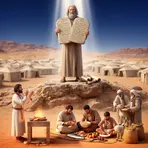
Religious rules God gave to the Israelites through Moses in the first five books of the Bible
Surface Forms
Morphology
The phrase is a direct possessive composition: 'law' (rules) + 'of' + 'Moses' (the named biblical leader), so its meaning — the laws associated with Moses — is directly derivable from the constituents. This construction is cross-linguistically common, so a B1 learner who knows the words (including that Moses is the law-giver) will readily infer the general sense, though detailed religious content (Torah, Ten Commandments) requires background knowledge.
Etymology
Law of Moses comes from the Bible story where God gave a set of rules to Moses on Mount Sinai. Those rules became the people's law, so the phrase means a collection of religious rules 'given by God'.