
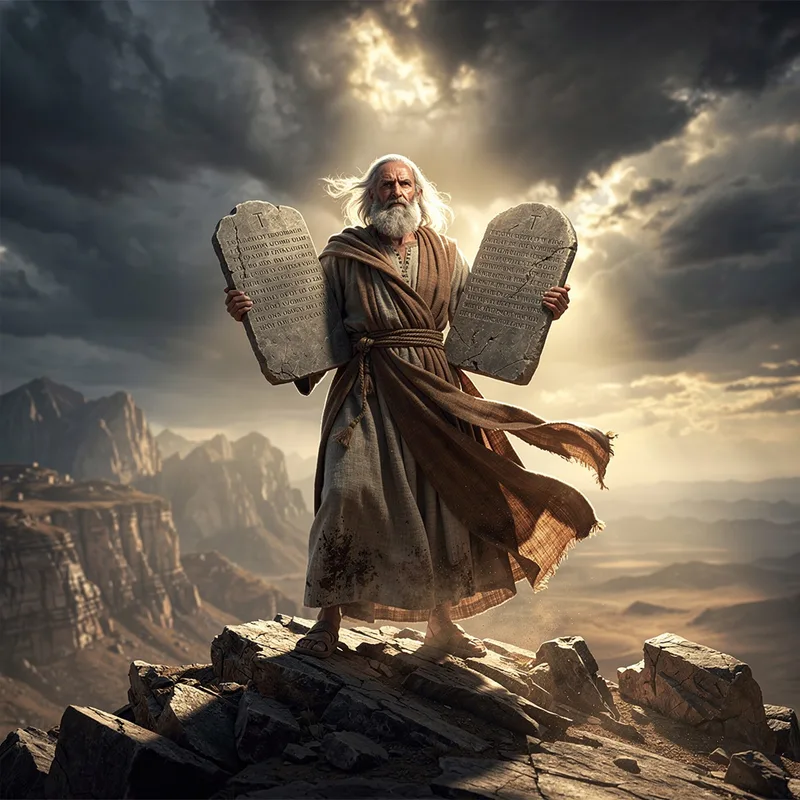
Moses
 235
3.4
235
3.4

- proper noun
- /ˈmoʊzɪz/
- Literature
- In the Bible, Moses led the Israelites out of Egypt and received the Ten Commandments on Mount Sinai.
- Moses on Mount Sinai
- God spoke to Moses
- law of Moses
Loading YouTube…
Watch on YouTubeAnd then God asked Moses who made man's mouth.
- And then God asked Moses who made man's mouth.
- That's why the baby Moses was hidden in the reeds.
- God grants Moses the ability to see God's back.
- Well, for example, Moses never crossed the Red Sea.
- And God said to Moses, I am who I am.
- And at that point, this same God of light appears to Moses on Mount Sinai, right?
- It's, it's, it comes right back to, to Moses and speaking to God.
- Well, the Torah is the five books of Moses written in Hebrew.
- Or people like Abraham or Moses, you know, I, he called them a friend, right?
- And this is actually a prayer of Moses.
- So there was no, there probably was no Moses.
- So they're in Egypt and they have to leave and Moses gets them out of Egypt.
- And the Israelites start complaining to Moses.
- And Doug and I, according to Barry Weiss, made some excellent Israelites as Moses and his wife.
- Like the Bible's not real, you're not Moses.
Examples
-
So they're in Egypt and they have to leave and Moses gets them out of Egypt.
-
That's why the baby Moses was hidden in the reeds.
-
And God said to Moses, I am who I am.
-
And God said to Moses, I am who I am.
-
"And the Lord spoke unto Moses saying..."
-
On the following day, Moses said to the people, "You have committed a grave sin."
Academic text (1991) -
God grants Moses the ability to see God's back.
-
Moses was a prophet, and beloved of God.
-
Moses parted the Red Sea, not Jesus.
-
According to the Bible, Moses was chosen by God to guide his people to freedom.
Compounds
 4
6.6
4
6.6
Religious laws given by God to the Israelites through Moses, including the Ten Commandments
Surface Forms
Etymology
Moses comes from the Hebrew name Moshe, which the Bible links to the verb mashah meaning 'to draw out' because Pharaoh's daughter 'drew him out' of the water. Some people also note the name looks like the Egyptian element ms meaning 'born' (as in Thutmose), so the name fits the story of a child saved from the river.