

Larix laricina
- noun
- /ˈlɛrɪks ləˈrɪʃənə/
- Specialized
- Every autumn, the needles of Larix laricina turn golden yellow before they fall off.
Examples
-
The Larix laricina thrives in cold, boggy areas across northern Canada and Alaska.
-
In wetland restoration projects, Larix laricina is often planted to help stabilize the soil.
-
The Larix laricina thrives in cold climates.
-
Many people admire the beauty of Larix laricina in autumn.
-
Every autumn, the needles of Larix laricina turn golden yellow before they fall off.
-
In wetland restoration projects, Larix laricina is often planted to help stabilize the soil.
-
The Larix laricina thrives in cold, boggy areas across northern Canada and Alaska.
Synonyms
 1
9.9
1
9.9

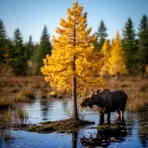
A medium-sized tree with short needles that turn yellow in autumn and grows in wet places
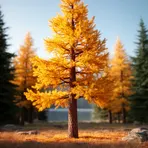
A medium-sized tree from Canada and northern United States with scaly brown bark and golden-yellow leaves in autumn
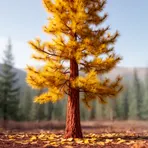
A medium-sized North American tree with needles that turn yellow in autumn and rust-brown bark
Surface Forms
Morphology
Larix + laricina
This is a Latin binomial: the genus 'Larix' clearly identifies larches, so a learner who recognises that element could infer the item is a kind of larch. However, 'laricina' is a Latin epithet (not a common English word and not found in the provided dictionary entry), and understanding the full name relies on knowledge of taxonomic naming conventions rather than ordinary compositional meaning, so the relation is only partially transparent to a B1 learner.
Etymology
Larix laricina is a scientific name made from old Latin words. Larix was the old name for the larch tree, and laricina means 'like Larix' or 'from Larix', so the name simply says this tree is the 'tamarack' or 'American larch'.