

Japanese medlar
- noun
- /ˈdʒæpəˌniːz ˈmɛdlər/
- She planted a Japanese medlar in her garden for its ornamental flowers and edible fruit.
Examples
-
The Japanese medlar is often grown for both its fruit and its attractive foliage.
-
The Japanese medlar tree grows well in warm climates.
-
The Japanese medlar thrives in warm climates and produces fruit in early spring.
-
I planted a Japanese medlar in my backyard.
-
The Japanese medlar is prized for its sweet, yellow fruit, which is often used in desserts.
-
In springtime, the flowers of the Japanese medlar tree attract many bees and butterflies.
-
Many gardeners choose to plant a Japanese medlar for its beautiful foliage and delicious fruit.
Synonyms


 1
9.1
1
9.1
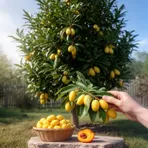
An evergreen tree grown for its small yellow edible fruit
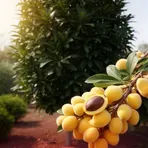
An evergreen tree that makes small fuzzy yellow fruit with a large stone called loquat

A small evergreen tree that grows in warm places and makes sweet, fuzzy yellow fruit with a large seed

A small evergreen tree that makes fuzzy yellow fruit
Surface Forms
Morphology
The phrase is a straightforward adjective + noun composition: 'Japanese' modifies 'medlar', so a learner who knows both words will infer it denotes a medlar associated with Japan (i.e., a type or variety of medlar tree). Specific botanical details (that it refers to the loquat and is evergreen) are specialized knowledge, but the basic referent as a Japanese variety of medlar is directly derivable from the constituents.
Etymology
Japanese medlar got its name when gardeners in Europe saw the tree from Japan and thought its small yellow fruit looked like an older European fruit called a medlar. So Japanese shows where it came from and medlar shows the fruit it reminded people of, and that is why the tree is also often called the 'loquat'.