

Japanese black pine
- noun
- The Japanese black pine is known for its resilience.
- Japanese black pine (Pinus thunbergii)
Examples
-
Many bonsai enthusiasts prefer the Japanese black pine for its hardy nature and unique appearance.
-
The Japanese black pine is often used in landscape gardens for its striking form.
-
He planted a Japanese black pine in his backyard to withstand coastal winds.
-
I planted a Japanese black pine in my garden.
-
In coastal gardens, the Japanese black pine is often chosen for its ability to thrive in salty conditions.
-
The landscaper recommended planting a Japanese black pine due to its beautiful long needles and resilience against pollution.
-
Homeowners appreciate the Japanese black pine for its attractive appearance and minimal care requirements.
Synonyms
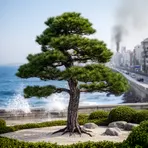
A Japanese pine tree often planted in gardens that can stand salt and pollution

A large Japanese pine with two long needles that tolerates salty air and city pollution
Surface Forms
Morphology
The noun phrase combines 'Japanese' (origin), 'black' (color/appearance) and 'pine' (a type of tree), so its meaning — a pine tree associated with Japan that is described as black/dark — is directly derivable from the constituents. This modifier+noun composition is a standard, cross-linguistic naming pattern for species and is therefore immediately comprehensible to a B1 learner who knows the individual words.
Etymology
Japanese black pine names a tree from Japan with dark bark and long needles. The parts are literal: Japanese shows where it comes from, black points to its dark look, and pine is the type of tree, so the name simply describes a garden tree people use for decoration and for planting near the sea because it resists salt and pollution.

