

Iridoprocne bicolor
- noun
- /ˌɪrɪdəˈproʊkni ˈbaɪkələr/
- Specialized
- The Iridoprocne bicolor is easily recognized by its iridescent blue-green feathers and white underparts.
Examples
-
Unlike many swallows, the Iridoprocne bicolor prefers to nest in natural or artificial tree cavities.
-
Birdwatchers often spot Iridoprocne bicolor near lakes and wetlands in the spring and summer.
-
The Iridoprocne bicolor is often seen near water bodies.
-
Have you spotted an Iridoprocne bicolor lately?
-
Birdwatchers often spot Iridoprocne bicolor near lakes and wetlands in the spring and summer.
-
The Iridoprocne bicolor is easily recognized by its iridescent blue-green feathers and white underparts.
-
Unlike many swallows, the Iridoprocne bicolor prefers to nest in natural or artificial tree cavities.
Synonyms

A small bird with a blue-green back and white belly that nests in tree holes
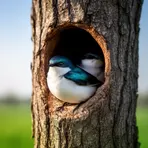
A small North American bird with shiny blue-green back and white belly that nests in tree holes
Surface Forms
Morphology
The binomial name combines the genus Iridoprocne (a group of swallows) with the adjective bicolor (two‑coloured), so the overall meaning — a two‑coloured member of that swallow genus — is directly derivable from the parts. Scientific Latin species names follow a transparent compositional pattern familiar across languages, so a learner who knows both constituents would understand the referent.
Etymology
Iridoprocne bicolor comes from older words that picture the bird: Iridoprocne suggests 'shiny' or rainbow-like colour and bicolor means 'two-coloured'. So imagine a small swallow with a shiny blue-green back and a white belly, and that's why the name fits the tree swallow.

