

Iberian
- noun
- /aɪˈbɪəriən/
- Peter the Iberian's hagiography provides clues to the linguistic landscape of Georgia in the fifth and sixth centuries and to how language functioned as a means of religious formation of children.
Examples
-
In the area around the Tower of David, Peter the Iberian established a monastery with hospices for pilgrims and the poor, and Bassa founded a shrine to St. Menas, with two attached monasteries (male and female).
Academic text (2007) -
The ancient text describes the customs of the Iberian people who lived in the region of modern-day Georgia.
-
The Life of Peter the Iberian reveals a rare moment in the monastic ritual of Melania's communities:
Academic text (2007) -
Both the missionary work of Nino and the origins of Peter the Iberian, accounts concerning which provide a significant focus of the present study, are to be situated in that region.
Academic text (2007) -
As some details of the following discussion will show, particularly those elements derived from the Life of Peter the Iberian, the features of family life that continued comprised at least certain aspects of accepted norms of marital relationships.
Academic text (2007) -
In light of Rufus's heightened awareness and positive evaluation of sexual renunciation, which emerges readily from other details in the Life of Peter the Iberian, the disclosure of an extramarital relationship of Peter's father may have been rather embarrassing for the story's hero.
Academic text (2007) -
An Iberian was known for their unique cultural practices and traditions that received much attention from historians.
-
During our studies, we learned about an Iberian whose contributions to early Christian monasticism were significant.
Compounds
 1
4.4
1
4.4

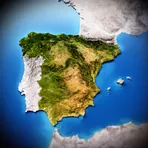
A large area of land in southwest Europe surrounded by sea on three sides where Spain and Portugal are
Surface Forms
Morphology
Etymology
Iberian was also used by ancient Greek writers for a kingdom called Iberia in the Caucasus in what is now Georgia, so an Iberian can mean a person from that ancient region too.