

Iberian
 1
8.2
1
8.2

- noun
- /aɪˈbɪəriən/
- Many artifacts from the Iberians reveal their advanced trading systems and social structures.
Examples
-
The Iberians built impressive settlements and had a rich culture during ancient times.
-
The same way you can't extrapolate data from an FTDNA project made up of New World descendants of "Basques" (who might already be lacking in diversity) to the Iberians in Europe.
Blog text (11) -
Are these people peninsular after all, Iberians spread out like butter on toast?
Academic text (1990) -
For the Celt Iberians, the short sighted decision to take Roman gold would cost them.
-
Sartorius wasn't as idle and used the free hand to subdue more Iberian tribes in the interior who hadn't submitted yet.
-
All the Iberians claimed dedication to Church and Crown: Bernal Diaz del Castillo, who accompanied Cortes, wrote, "We came here to serve God and the king, and also to get rich."
Fiction book (1992) -
Ever since the Spanish Empire began to lose control of its North American territories—its settlements in Florida and the Southwest—Iberians were perceived as ill-mannered and avaricious, if not uncivilized.
Academic text (1997) -
Historians study the Iberians to understand the interactions between ancient peoples in the Iberian Peninsula.
Synonyms

A person from the area of Spain and Portugal during Roman times
Compounds
 1
4.4
1
4.4
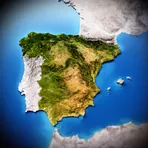
A large area of land in southwest Europe surrounded by sea on three sides where Spain and Portugal are
Surface Forms
Morphology
Etymology
Iberian comes from the old place name Iberia, linked to the river Iberus, which is now called the Ebro, and Iberus probably meant 'river'. So an Iberian was first someone who lived by that river and later came to mean a person from the whole Iberian Peninsula.