
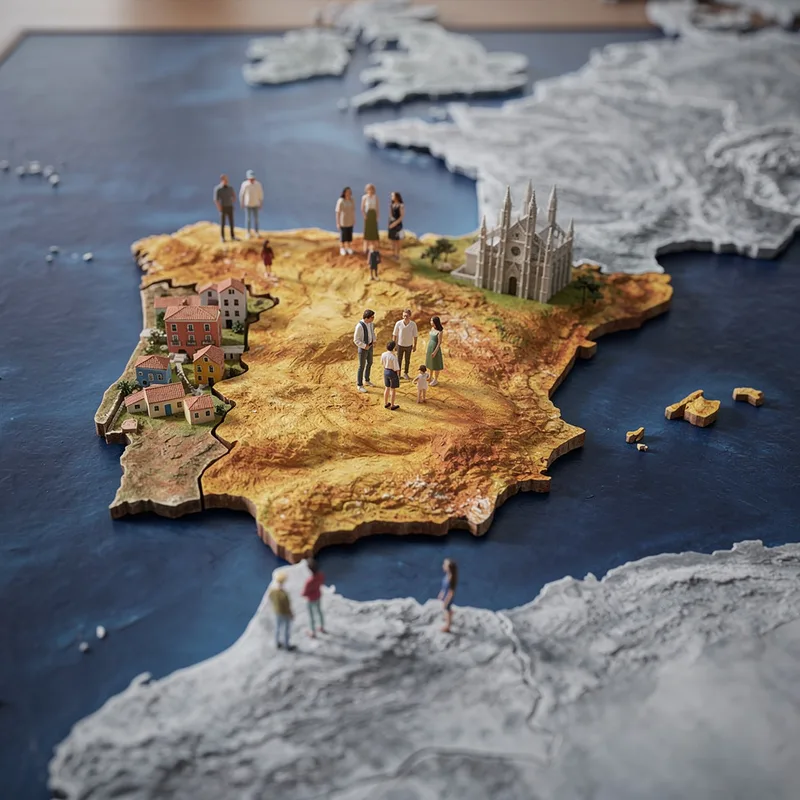
Iberian
 3
6.5
3
6.5

- adjective
- /aɪˈbɪəriən/
- In the Iberian Peninsula, a paradigmatic example is the endangered Iberian lynx (Lynx pardinus).
- Iberian Peninsula
- Iberian lynx
- Iberian tradition
Loading YouTube…
Watch on YouTubeThe Yamnias genes are still in the Iberian population.
- The Yamnias genes are still in the Iberian population.
Examples
-
Ironically, Latin American culture continues to be strongly influenced by the traditional Iberian values from which Spain has largely escaped.
Academic text (1993) -
Indeed, the two Iberian countries, especially Spain, like to present themselves as models for Latin America.
Academic text (1999) -
And for the master, Iberian wine.
-
Then they review the rise of the English and Iberian sea power.
Academic text (1990) -
Spain wants to have one Iberian Command, headed by a Spanish general.
Academic text (1996) -
These islands were, in a real sense, testing grounds for Iberian colonialism in the New World.
-
Soon, rising powers such as England, the Dutch Republic and France would begin to challenge Iberian hegemony over the New World.
-
In the political and religious realms, Iberian women were barred from positions of authority.
Academic text (1999) -
One evident exception is the Iberian Peninsula, which was mostly within this Khalifate but was reconquered by Christians.
Academic text (2000) -
The Iberian Peninsula is home to diverse cultures and languages, primarily Spanish and Portuguese.
Compounds
 1
4.4
1
4.4
A large area of land in southwest Europe surrounded by sea on three sides where Spain and Portugal are
Surface Forms
Morphology
Etymology
Iberian comes from Iberia, the name for the Iberian Peninsula that includes Spain and Portugal, so Iberian means 'from the Iberian Peninsula' or 'relating to Spain and Portugal'.