
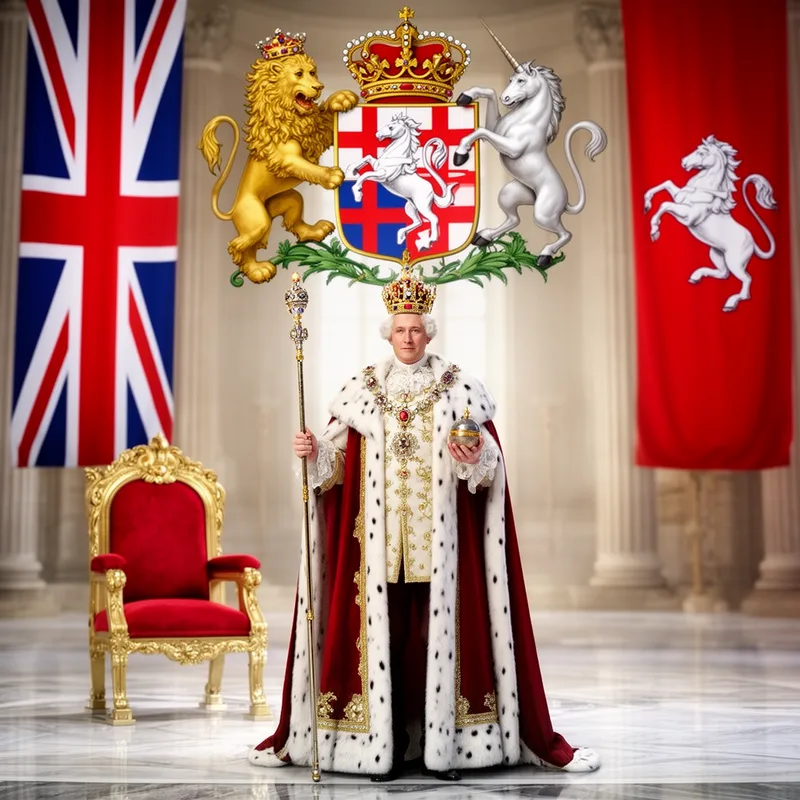
Hanoverian


 1
8.3
- adjective
- /ˌhænəˈvɪəriən/
- In Norfolk, in Yorkshire, even in Scotland and Wales, those wild lands with the least claim of loyalty to their Hanoverian king—there guerrillas fought a war that was vicious and unrelenting.
- Hanoverian horse
Examples
-
The case that comes to mind is England's Hanoverian kings involving their country in continental wars to protect a small German country linked by blood ties to the sovereign.
Blog text (17) -
The association of turnips with poverty, as well as with the Hanoverian kings, is confirmed by Squire Western in Tom Jones (1749), when he voices his fears that "the Hanover rats
Academic text (1995) -
The Hanoverian succession to the United throne was recognised.
-
It's a position that's sometimes referred to as "Hanoverian monarchy."
Blog text (11) -
Of these couples, 77.4 percent had Hanoverian and/or Nassau area heritage.
Academic text (1990) -
Moreover, wealthy Hanoverian women who married Nassauer men chose the Rhenish Franconian scarf.
Academic text (1990) -
Despite the support of such men as Andrew Fletcher of Saltoun, the champion of the doomed Scottish Parliament, union was achieved in 1707, and the Hanoverian succession was secured.
Academic text (2006) -
The vegetable was associated with George III not only by virtue of his own farming activities and efforts to promote progressive agriculture, but also as the result of a long-standing satirical tradition linking turnips with the Hanoverian kings.
Academic text (1995) -
Set over and against the late Stuart/early Hanoverian Anglican renaissance, it appeared to many of the dissenters that their reform and sectarian movements were in total disarray, if not utter decline.
Academic text (2006) -
The Hanoverian supporters played a crucial role in the establishment of the British monarchy.
Compounds
Surface Forms
Morphology
Etymology
Hanoverian is built from Hanover and -ian meaning 'relating to', like in Canadian, so it points to things connected with that place or family. That's why we use Hanoverian as an adjective for people, clothes, buildings, or ideas linked to the House of Hanover.