
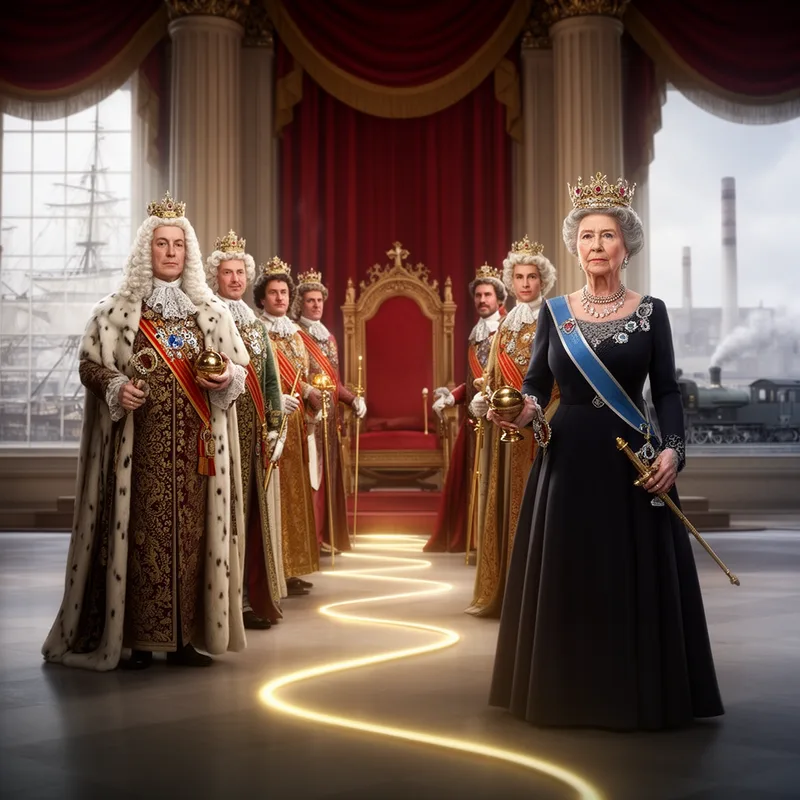
Hanoverian line


 1
9.3
- proper noun
- The Hanoverian line began its reign in 1714 with the ascension of George I to the British throne.
Examples
-
Queen Victoria marked the end of the Hanoverian line when she died in 1901.
-
The Hanoverian line began with George I in 1714.
-
Many historical changes occurred during the rule of the Hanoverian line, including the Industrial Revolution.
-
Queen Victoria was the last monarch of the Hanoverian line.
-
Queen Victoria marked the end of the Hanoverian line when she died in 1901.
-
The Hanoverian line began its reign in 1714 with the ascension of George I to the British throne.
-
Many historical changes occurred during the rule of the Hanoverian line, including the Industrial Revolution.
Synonyms
 1
8.2
Royal family that ruled Britain from 1714 to 1901, starting with George I and ending with Queen Victoria
 1
7.3
The royal family that ruled Britain from 1714 to 1901
Surface Forms
Morphology
Both constituents are directly informative: 'Hanoverian' denotes members of the Hanover royal family and 'line' denotes a familial lineage. Together they compositionally yield 'the Hanover royal line/house' (i.e. the succession of Hanoverian monarchs), a meaning that is predictable from the parts and mirrored in other languages, so a learner who knows both words would grasp the phrase.
Etymology
The name Hanoverian line comes from the German region Hanover and the word line, meaning a family line. In 1714 the ruler of Hanover became king of Britain, so the same family from Hanover ruled until 1901, which is why 'Hanoverian line' means the English royal house that ruled then.