
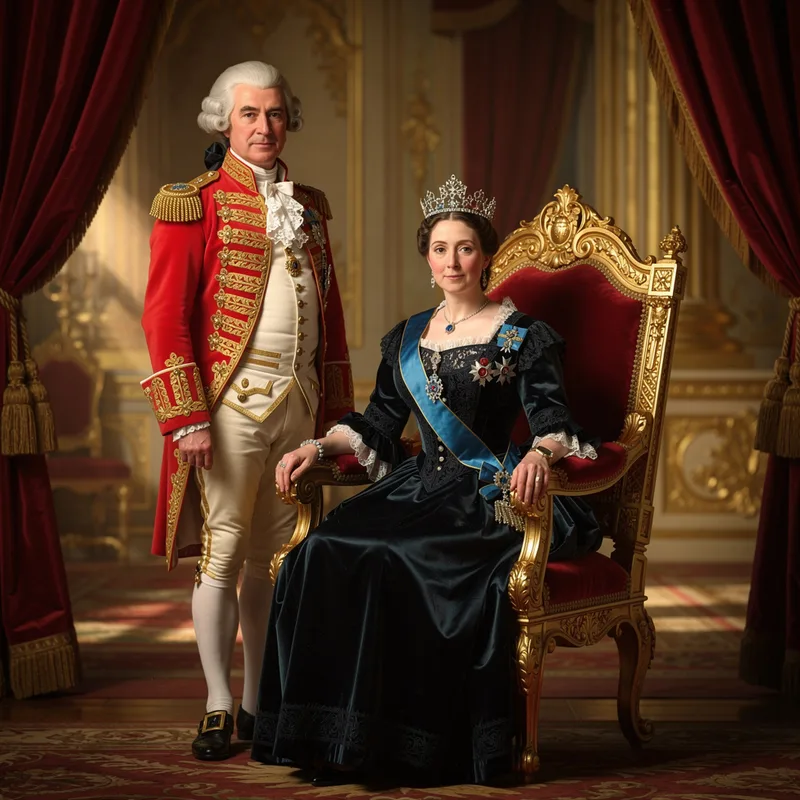
Hanover


 1
7.3
- proper noun
- /ˈhænoʊvər/
- The English royal house, known as the Hanover, ascended to the throne with George I in 1714.
- Hanover College
- New Hanover
Examples
-
For her work, Mitchell received three honorary degrees: LL.D.s from Hanover College (1853) and Columbia (1887) and a Ph.D. from Rutgers (1870).
Academic text (1992) -
The first Sofia of Hanover and her heirs were chosen as the nearest Protestant successors.
-
Even the Royal House of Hanover had the wheel, sir.
-
So and in this case, it did as well because a lot of people did like the idea that George of Hanover was going to become king.
-
V Section was not headquartered in Berlin, it was a division of intelligence, based in Hanover, reporting directly to London.
-
Queen Victoria was a prominent figure of the Hanover dynasty that ruled England.
-
The Hanover family played a crucial role in the history of the British monarchy.
Synonyms
 1
8.2
Royal family that ruled Britain from 1714 to 1901, starting with George I and ending with Queen Victoria
 1
9.3
A family of British kings and queens who ruled from 1714 to 1901
Compounds
1
8.2
Royal family that ruled Britain from 1714 to 1901, starting with George I and ending with Queen Victoria
Surface Forms
Etymology
Hanover is the name used for the royal family because the kings came from the German city called Hanover, so the dynasty was named after that place.