
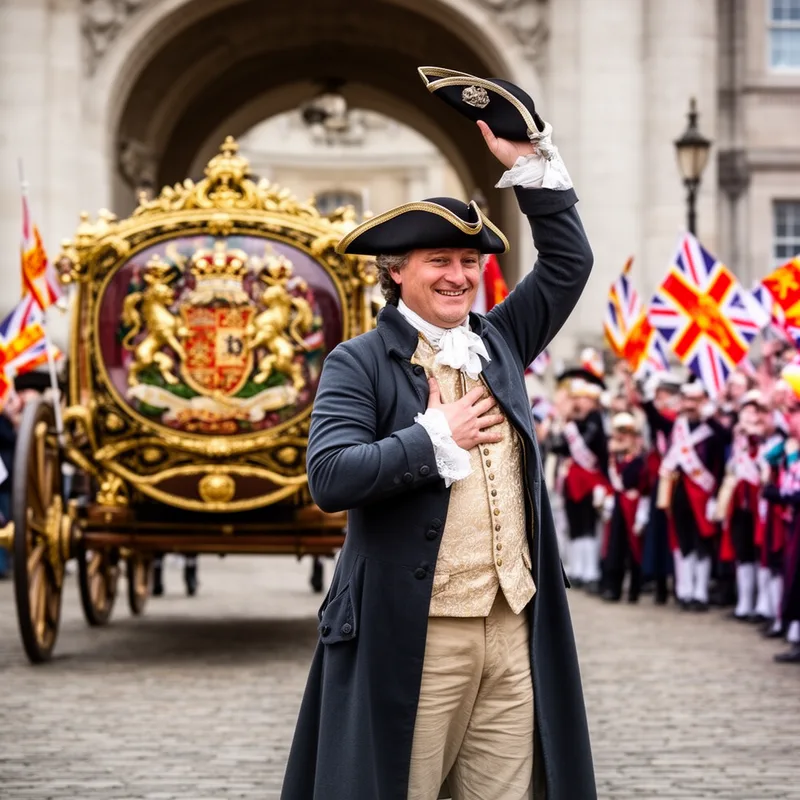
Hanoverian


 1
9.1
- noun
- /ˌhænəˈvɪəriən/
- In the early 1700s, many Hanoverians became prominent figures in British politics.
Examples
-
On the chosen date, I rode the Hanoverian out north in the dusk, the ring nestling in a pouch of velvet in my waistcoat pocket.
Fiction book (1997) -
The local museum showcased artifacts related to the Hanoverians and their influence on British history.
-
If living in Comaltown, for instance, a young woman probably would marry a Hanoverian.
Academic text (1990) -
We had upwards of 50 foreigners, Germans, Poles, and Hanoverians.
Academic text (1993) -
In the early 1700s, the English settled the question of succession by naming the Hanoverians as heirs to the English throne.
Academic text (2006) -
Hanoverians preferred Comaltown, and the people emigrating from Brunswick lived mainly in Hortontown.
Academic text (1990) -
The hautbois was known in the American colonies at least by 1714 when a "Band of Musick" of several hautbois and signaling trumpets performed on October 11 in New York in a parade observing the death of Queen Anne and celebrating the coronation of King George I, the first Hanoverian on the British throne.
Academic text (2015) -
She proudly identified as a Hanoverian, celebrating her heritage from the royal house.
Compounds

Surface Forms
Morphology
Etymology
Hanoverian comes from the German place Hanover plus the ending -ian, which means 'from' or 'relating to' and is the same ending you see in Canadian; a helpful way to remember is to think of someone who is 'from Hanover' or closely linked to that family. That's why a Hanoverian was used for a supporter or member of the royal House of Hanover.