

Gregorian


 1
7.7
1
7.7
- adjective
- /ɡrɪˈɡɔːriən/
 :
gregoriano
:
gregoriano
- This intermeshing gave another unit for measuring time, the calendar round, a 52-year cycle when the dates began repeating themselves (much as in the same way that our Gregorian calendar repeats every 400 years, although there are other repeating cycles within that).
Examples
-
The modern Gregorian calendar, introduced in 1582, is now used worldwide for civil purposes.
-
And this is not to mention the fact that there are different calendars in the world that have different New Year's, and the fact that even our Gregorian calendar has been used with different New Year's in mind.
Blog text (17) -
Journalism is still on the Gregorian calendar and it's it's still, it's still on.
-
Am I the only one that realized that Justanothername used the Gregorian Calendar (the document in question) to defend the right of the Gregorian Calendar?
Blog text (11) -
The Mayan Calendar itself would be unaffected, as it predates the Gregorian Calendar by many years.
Blog text (13) -
The Gregorian reform smelled like a Romish plot, and Ussher's contemporaries would be damned if they would accept it.
Academic text (1991) -
Every year, we follow the Gregorian calendar to mark important holidays and events.
-
The Gregorian calendar has helped standardize the way we track time across different cultures.
Compounds
 2
9.5
2
9.5
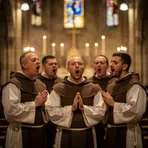
A sacred song of one melody that people sing with voices and no instruments in the Catholic Church


- Specialized
A musical scale used in old church singing that gives chants a special sound

- Specialized
A telescope that uses two curved mirrors to focus light back through a hole in the main mirror
Surface Forms
Morphology
Gregorian = Gregory (semi-transparent) = Gregory + an
Regular adjectival formation from 'Gregory' + '-an', but the meaning 'relating to the calendar introduced by Pope Gregory XIII' depends on historical knowledge of which Gregory is meant.
Etymology
Gregorian in 'Gregorian calendar' comes from Pope Gregory XIII, who changed the calendar in 1582 to fix how the dates matched the seasons, so the Gregorian calendar is the system he introduced and most countries now use.