
German millet
- noun
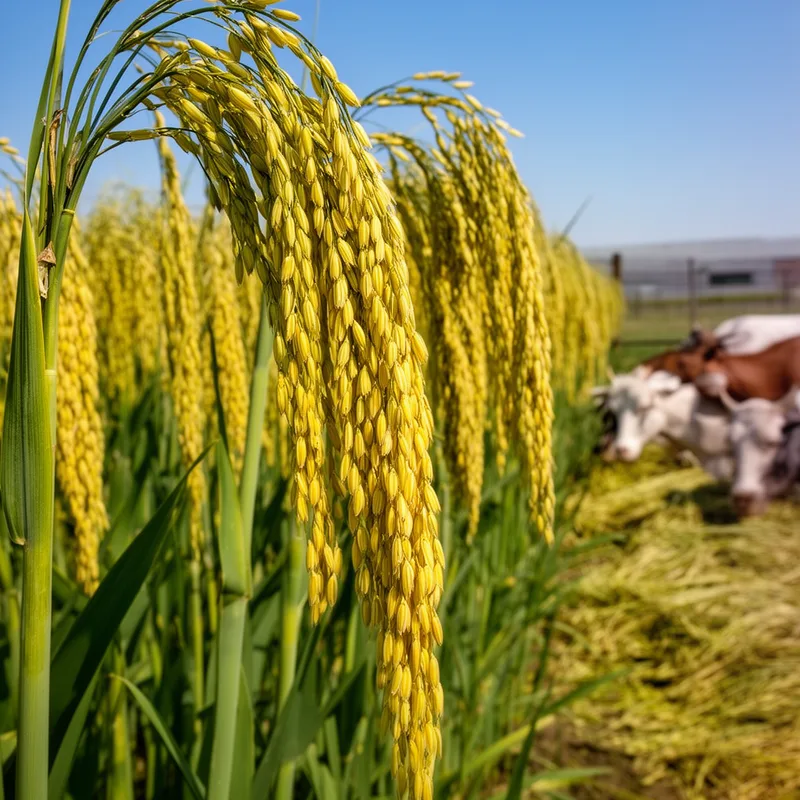
- The large, drooping seed heads are characteristic of German millet.
Examples
-
Farmers often plant German millet as a summer forage crop for livestock.
-
I bought some German millet for my birds.
-
In regions with dry summers, German millet provides a valuable source of feed.
-
Farmers often grow German millet in the summer.
-
Farmers often plant German millet as a summer forage crop for livestock.
-
In regions with dry summers, German millet provides a valuable source of feed.
-
The large, drooping seed heads are characteristic of German millet.
Synonyms

 8
4.3
8
4.3

A small grain from a grass plant used as food for people and animals

A type of foxtail millet with large hanging seed heads and yellow grains
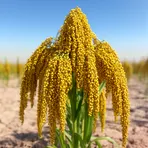
A grain plant with yellow seeds in large hanging spikes
Surface Forms
Morphology
The compound is a straightforward adjective+noun naming a variety: 'German' (from Germany) + 'millet' (a small-seeded cereal) yields a type/variety of millet associated with Germany. This compositional pattern is cross-linguistically common and a B1 learner who knows both words would readily infer the intended meaning.
Etymology
German millet may get its name from farmers in Germany who grew this kind of millet a lot, so people began to call it 'German'. Its long, hanging seed heads and yellow 'grains' give a clear picture to remember: it is a cereal plant often grown for animal feed.