

Genista raetam
- noun
- Specialized
- The Genista raetam thrives in arid regions of the Middle East, particularly in the sandy plains of Syria and Arabia.
Examples
-
The delicate white flowers of Genista raetam make it a striking sight in the desert landscape.
-
Some scholars believe that the plant referred to as juniper in the Old Testament was actually Genista raetam.
-
The Genista raetam thrives in arid conditions.
-
Have you seen a Genista raetam in bloom?
-
The Genista raetam, with its small white flowers, is commonly found in the deserts of Syria and Arabia.
-
In traditional texts, the Genista raetam is often identified with the juniper mentioned in the Old Testament.
-
During the spring, the Genista raetam bursts into bloom, adding beauty to the otherwise barren desert.
Synonyms

 1
8.2
1
8.2

A desert shrub with small white flowers found in Syria and Arabia and mentioned in the Bible

A small desert shrub with white flowers that gives shade and appears in the Bible

A desert shrub with small white flowers used for shelter and firewood
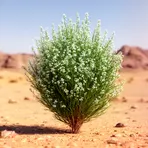
A desert shrub from the Middle East with small white flowers
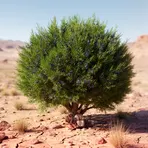
An evergreen shrub that grows in dry places with small thin leaves and berries
Surface Forms
Morphology
The binomial combines a genus name ('Genista' = broom) with a specific epithet ('raetam' = a shrub with small white flowers), so a learner who knows both constituents can infer it refers to a particular shrub/species of broom. Specific cultural or geographic details (native range, Old Testament identification) are not directly derivable from the parts, but the core identification as a shrub is predictable.
Etymology
Genista raetam is the name for a low desert shrub with small white flowers that grows in parts of Syria and Arabia. One popular story says this is the same plant called the 'juniper' or 'broom' in the 'Old Testament', a common shrub people used and knew well, so the name now refers to that familiar desert plant.