

Frankenstein
 172
7.2
172
7.2

- proper noun
- /ˈfræŋkənˌstaɪn/
- Literature
- Having decoded the secrets of science, Frankenstein loses control over his own creation.
- Dr. Frankenstein
- Victor Frankenstein
- Frankenstein's creation
Loading YouTube…
Watch on YouTubeSo she's like, you know, my great Uncle Victor Frankenstein had these crazy journals and they look like the writings of a madman.
- So she's like, you know, my great Uncle Victor Frankenstein had these crazy journals and they look like the writings of a madman.
Examples
-
You should run classic horror movies, like Frankenstein or Dracula.
-
We'll be looking at Frankenstein and the Last Man.
-
The first one is Frankenstein by Mary Shelley.
-
Total power over his creation was Victor Frankenstein's goal, and his act of supreme creation repulsed him.
Academic text (2001) -
In Mary Shelley's novel, the brilliant scientist Frankenstein becomes obsessed with creating life.
-
Victor Frankenstein is a complex character who ultimately regrets his creation.
-
Many film adaptations have brought Frankenstein and his creature to the big screen.
Synonyms


 1
6.2
1
6.2
A Swiss scientist in Mary Shelley's novel who makes a living being from body parts
Compounds

- Offensive
A scientist whose work many people see as dangerous or unethical

- Literature
A person who creates or alters living things in risky, shocking ways
- Literature
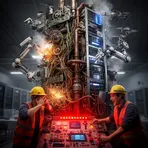
A machine or system made from mismatched parts that becomes dangerous and hard to control

- Literature
A person or company that creates powerful technology that causes dangerous problems
Surface Forms
Etymology
Frankenstein is the name of the scientist in Mary Shelley's 1818 novel who created a living creature from parts of dead bodies, and many people wrongly call the monster 'Frankenstein' when the name belongs to the creator. So Frankenstein is remembered as the scientist who wanted to make life and whose experiment went badly wrong.