
Victor Frankenstein


 1
6.2
1
6.2
- proper noun
- /ˈvɪktər ˈfræŋkənstaɪn/
- Literature
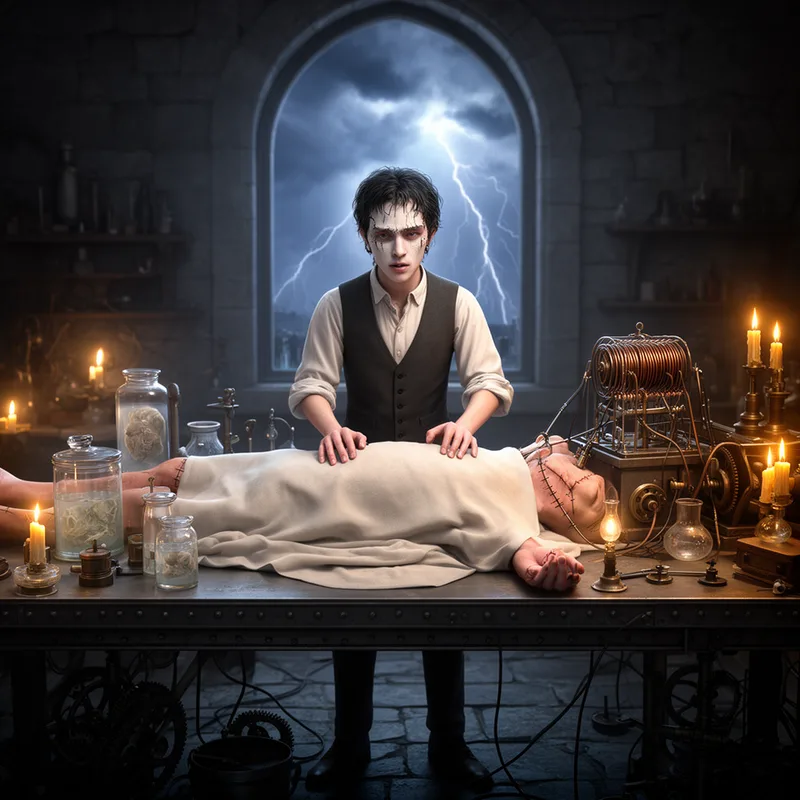
- In Mary Shelley's novel, Victor Frankenstein's ambition drives him to defy nature and create a living being from dead body parts.
Examples
-
Shelley's classic tale tells the story of medicine practiced to the extreme, as Victor Frankenstein uses electricity to bring life to a creature composed of cadaver parts.
Fiction book (2002) -
In the original "Frankenstein," after Victor Frankenstein creates his monster, he abandons it to be persecuted and ostracized.
Blog text (18) -
This is the private scientific journal of Victor Frankenstein.
-
What do you know of a scientist by the name of Victor Frankenstein?
-
Victor Frankenstein: Two years of work to create life!
Fiction book (1999) -
Victor Frankenstein gave you life, but he could not restore your soul.
-
It looks like Victor Frankenstein's handwritten account of how he brought his creature to life.
-
Dr. Victor Frankenstein's unending quest for knowledge leads him to a study of how the human body is imbued with life.
Fiction book (2002) -
In Frankenstein, Mary portrays Victor Frankenstein as a parent who deserts his evildoing "child" without ever examining his own contribution to the child's failings and crimes.
Fiction book (2002) -
Victor Frankenstein is often viewed as a tragic figure who suffers the consequences of his reckless pursuit of knowledge.
Synonyms
 172
7.2
172
7.2
A scientist in Mary Shelley's novel who makes a living creature from dead body parts
Surface Forms
Morphology
Victor + Frankenstein
This is a culturally specific literary reference rather than a compositional phrase: knowing the name 'Victor' and the form 'Frankenstein' does not let a learner derive the metaphorical sense without knowledge of Mary Shelley’s story and how ‘Frankenstein’ is used as a cultural metaphor for a creator whose creation causes harm. The meaning depends on world-knowledge and conventional metaphorical use, so it is not predictably derivable from the constituent words for a B1 learner.
Etymology
Victor Frankenstein comes from Mary Shelley's novel 'Frankenstein'. He is a Swiss scientist who puts together dead body parts and makes them live, so the name refers to the scientist who created a living being.