
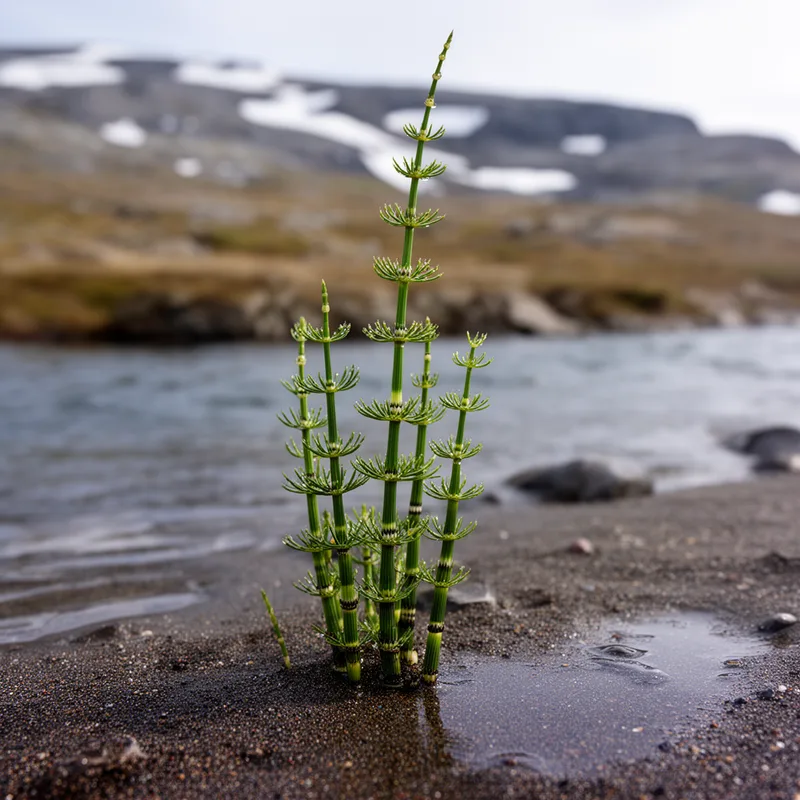
Equisetum variegatum
- noun
- Specialized
- The delicate stems of Equisetum variegatum make it easily distinguishable from other horsetail species.
Examples
-
Equisetum variegatum is commonly found growing in wet, sandy soils along riverbanks in northern regions.
-
Researchers studied the distribution of Equisetum variegatum across Greenland and Scandinavia.
-
The Equisetum variegatum thrives in wetland areas.
-
Did you know that Equisetum variegatum can grow up to three feet tall?
-
Equisetum variegatum is commonly found growing in wet, sandy soils along riverbanks in northern regions.
-
The delicate stems of Equisetum variegatum make it easily distinguishable from other horsetail species.
-
Researchers studied the distribution of Equisetum variegatum across Greenland and Scandinavia.
Synonyms
A small plant with thin jointed stems that have stripes of different color
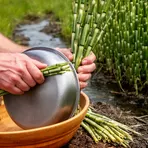
A plant with hollow striped stems used to scrub pots
Surface Forms
Morphology
Equisetum + variegatum
Although 'Equisetum' signals the horsetail plant genus, the second element 'variegatum' is a Latin species epithet (not a common English word and marked here as not found in the dictionary). The whole string functions as a scientific name (a proper noun) rather than a predictable English compound, so a B1 learner who merely knows the listed constituents would not reliably derive the full referential meaning without botanical/Latin knowledge.
Etymology
Equisetum variegatum comes from Latin words. Equisetum points to 'horse' because the plant's thin, jointed stems look like a horse's tail, and variegatum means 'many colours', so the name means 'varied horsetail' and helps you remember its thin, often striped stems.

