
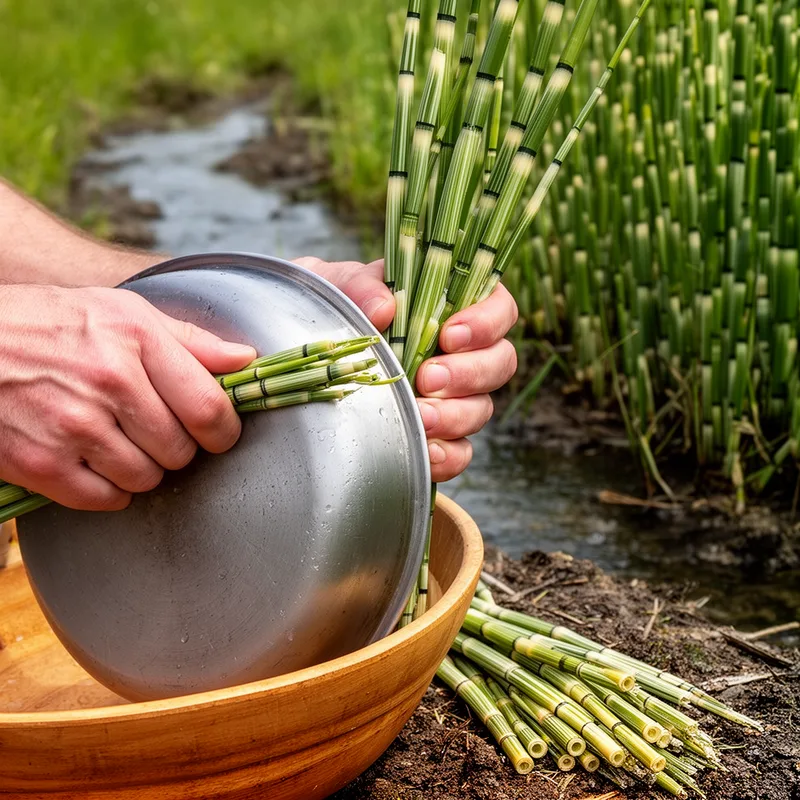
variegated scouring rush
- noun
- /ˈvɛrɪɡeɪtɪd ˈskaʊərɪŋ rʌʃ/
- UK
- Historically, settlers used the abrasive stems of variegated scouring rush to clean pots and pans.
Examples
-
The variegated scouring rush thrives in damp meadows and along streambanks across northern Europe.
-
Botanists admire the striped stems of the variegated scouring rush when conducting field studies.
-
The variegated scouring rush thrives in wetland areas.
-
Many gardeners appreciate the variegated scouring rush for its unique appearance.
-
Botanists admire the unique striped stems of the variegated scouring rush during their field research.
-
Settlers in the past used the abrasive stems of variegated scouring rush to effectively clean kitchenware.
-
In northern Europe, the variegated scouring rush flourishes in moist meadows and along streambanks.
Synonyms
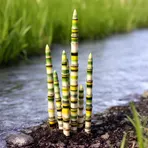
A small plant with thin jointed stems that have stripes of different color

A small plant with thin jointed green stems and ringed branches that grows in wet northern places
Surface Forms
Morphology
variegated + scouring + rush
Each component contributes directly to the referent: 'variegated' (having patches of different colors) modifies 'scouring rush' (a marsh plant traditionally used for scrubbing), so the phrase denotes a color-patterned rush used for scouring. This is a straightforward compositional botanical name and would be interpretable by a B1 learner who knows the constituent words.
Etymology
Variegated scouring rush may come from two simple images: variegated meaning 'striped', and scouring rush because its rough, ridged stems were used like a scrub brush to 'clean' pots. So the name describes a striped plant that people used 'to clean' things.

