

Eolithic
- noun
- /ˌiːəˈlɪθɪk/
- Archaic
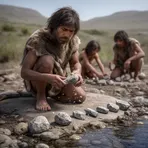
- The Eolithic period marks a significant transition in human history.
Examples
-
Archaeologists debated the significance of the Eolithic period and its primitive tools.
-
Few sites from the Eolithic era have been conclusively identified in Europe.
-
The Eolithic hypothesis remains controversial among some prehistoric scholars.
-
Many Eolithic artifacts have been found in Africa.
-
During the Eolithic period, early humans began to make simple stone tools for daily use.
-
The Eolithic era is often referred to as the dawn of human culture due to the emergence of basic tool-making.
-
Researchers study the Eolithic artifacts to gain insight into the lives of our ancient ancestors.
Synonyms

 47
5.2
47
5.2

From the time before people wrote things down
 5
8.4
5
8.4
From the earliest part of the Stone Age when people used stone tools


 1
6.9
1
6.9
A time before people wrote things down
Compounds
Surface Forms
Morphology
Etymology
Eolithic comes from Greek parts eo- meaning 'dawn' and -lithic meaning 'stone'. So Eolithic refers to the 'dawn' of the Stone Age, when people first used very simple stone tools.