

English plantain
- noun
- The English plantain is often found growing in meadows and along roadsides across Europe.
Examples
-
She picked a few leaves of English plantain to use as a traditional herbal remedy.
-
Gardeners sometimes remove English plantain because it spreads quickly in lawns.
-
The English plantain is often found in gardens.
-
I saw an English plantain growing by the path.
-
Gardeners sometimes remove English plantain because it spreads quickly in lawns.
-
The English plantain is often found growing in meadows and along roadsides across Europe.
-
She picked a few leaves of English plantain to use as a traditional herbal remedy.
Synonyms

A wild plant with long narrow leaves with raised veins that grows in fields and by roads

A small wild plant with long narrow leaves that often grows in fields

A small wild plant with long narrow ribbed leaves and a tall flower stalk

A common plant with long narrow leaves that have clear veins
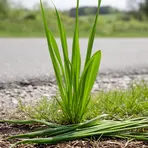
A common wild plant with long narrow ribbed leaves that grows along roads in cool areas
Surface Forms
Morphology
The noun phrase is directly compositional: 'English' marks origin/association and 'plantain' names the plant, so the phrase straightforwardly denotes the plantain species associated with England/Eurasia. This adjective + noun naming pattern is common and predictable across languages, so a B1 learner who knows both constituents will understand the meaning.
Etymology
English plantain is the name for a common Eurasian weed with long, narrow, ribbed leaves. The word plantain comes from an old word meaning 'sole of the foot' because the flat leaves look like a foot sole, and the word English marks the kind that grew in England, so the name points to this particular species.

