

Plantago lanceolata
- noun
- Specialized
- Plantago lanceolata is commonly found growing along roadsides and in meadows.
Examples
-
The leaves of Plantago lanceolata are used in traditional herbal remedies.
-
I found a Plantago lanceolata growing in my garden.
-
Plantago lanceolata is commonly found growing along roadsides and in meadows.
-
Researchers studied the pollination patterns of Plantago lanceolata in various climates.
-
The Plantago lanceolata is often used in herbal medicine.
-
The leaves of Plantago lanceolata are used in traditional herbal remedies.
-
Researchers studied the pollination patterns of Plantago lanceolata in various climates.
Synonyms

A common plant with long narrow leaves that have clear veins

A small wild plant with long narrow leaves that often grows in fields

A small wild plant with long narrow ribbed leaves and a tall flower stalk
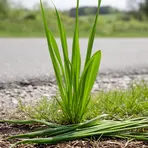
A common wild plant with long narrow ribbed leaves that grows along roads in cool areas

A common wild plant with long narrow ribbed leaves that grows in lawns and roadsides
Surface Forms
Morphology
Plantago + lanceolata
The form is a scientific binomial: 'Plantago' names the plantain genus while 'lanceolata' is a Latin species epithet describing a lance-shaped (lanceolate) leaf form. Knowing these constituents (or recognizing the root 'lance-') allows inference that it is a plantain with narrow, lance-shaped leaves, but because the species epithet is Latin and not a common B1 lexical item the meaning is only partially predictable.
Etymology
Plantago lanceolata comes from old Latin words that describe how the plant looks: Plantago comes from 'planta' meaning the sole of the foot because the flat leaves lie close to the ground, and lanceolata means 'spear-shaped' because the leaves are long and narrow. So the name helps you picture a low plant with long, spear-like leaves.

