

Cupressus sempervirens
- noun
- Specialized
- The garden is lined with Cupressus sempervirens, lending a Mediterranean air to the landscape.
Examples
-
A row of Cupressus sempervirens creates an elegant natural border along the driveway.
-
Botanists studied the growth rings of ancient Cupressus sempervirens specimens.
-
The Cupressus sempervirens is often used in landscaping.
-
In Italy, the Cupressus sempervirens is a common sight.
-
A row of Cupressus sempervirens creates an elegant natural border along the driveway.
-
The garden is lined with Cupressus sempervirens, lending a Mediterranean air to the landscape.
-
In Italy, the Cupressus sempervirens is a common sight.
Synonyms
 15
5.3
15
5.3

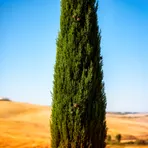
A tall evergreen tree with dark, flat leaves and small round cones
 3
3.5
3
3.5
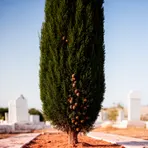
A tall evergreen tree with dark, flat leaves and small round cones

A tall, thin evergreen tree that grows in a narrow column and people plant in gardens

A tall tree with thin grey bark and upright branches often planted in gardens and cemeteries

A group of evergreen trees like cypress that keep their leaves all year
Surface Forms
Morphology
Both constituents are semantically compositional: 'Cupressus' identifies the cypress genus and 'sempervirens' literally means 'always green/evergreen', so a learner who knows those words can infer it denotes an evergreen cypress tree. Botanical Latin binomials are predictable genus + descriptive epithet formations, making the overall meaning directly derivable from the parts.
Etymology
Cupressus sempervirens is a Latin name made of two parts: Cupressus meaning 'cypress' and sempervirens meaning 'always green'. So the name paints the picture of a tall, narrow cypress that keeps its leaves all year and explains why people plant it as a neat border.