
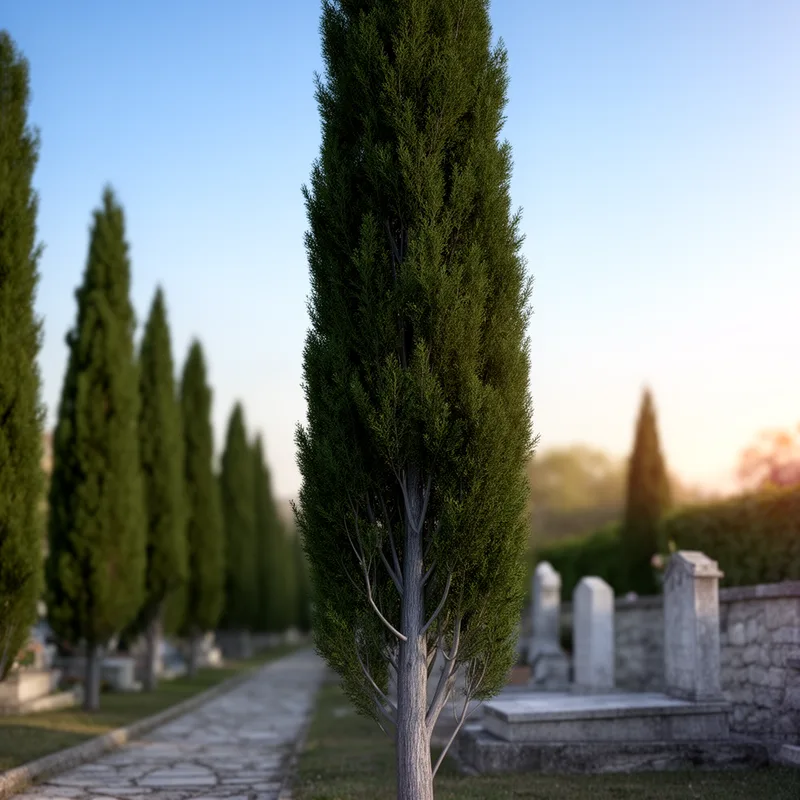
Mediterranean cypress
- noun
- The Mediterranean cypress is a common sight in Italian cemeteries and gardens.
Examples
-
Rows of Mediterranean cypress trees lined the ancient stone pathway.
-
Gardeners often choose the Mediterranean cypress for its slender, elegant silhouette.
-
The Mediterranean cypress is known for its tall, slender shape.
-
Many gardens feature the Mediterranean cypress as a focal point.
-
Rows of Mediterranean cypress trees swayed gently in the breeze along the coastline.
-
The Mediterranean cypress is widely appreciated for its ability to thrive in dry, rocky soils.
-
In southern France, the Mediterranean cypress often serves as a picturesque backdrop in landscaped gardens.
Synonyms

A tall cypress tree from the Mediterranean with thin grey bark and upright branches

A tall, thin evergreen tree that grows in a narrow column and people plant in gardens
Surface Forms
Morphology
The noun phrase simply combines the adjective 'Mediterranean' (pertaining to the Mediterranean region) with the noun 'cypress' (a type of tree), so its meaning 'a cypress tree from the Mediterranean region' is directly and predictably derived from the parts. This adjective+noun compositional pattern is common across languages, so a B1 learner who knows both constituents will readily understand the phrase.
Etymology
Mediterranean cypress comes from the tree's home and its type: Mediterranean is the sea region where it grows, and cypress is a tall, narrow tree. Because its slim, upright shape was often planted in gardens and by graves, the name now refers to that tall tree people use to decorate gardens and mark graves.

