
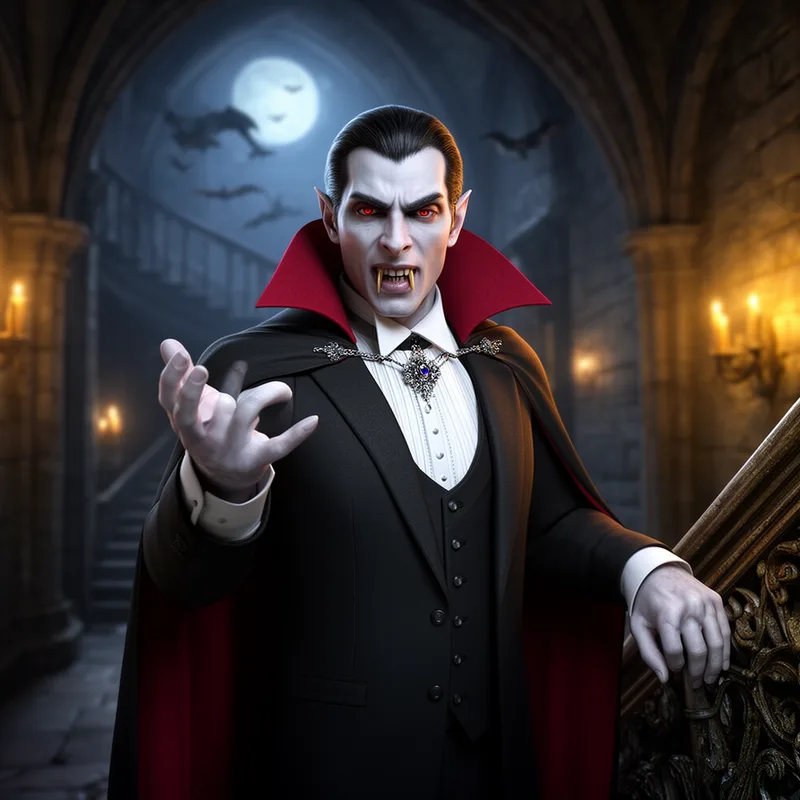
Count Dracula
- proper noun
- /kaʊnt ˈdrækjʊlə/
- Literature
- Count Dracula, a symbol of fear and mystery, has been adapted into countless films and television series over the decades.
Examples
-
Come in, Count Dracula.
-
One of them's a coffin containing the remains of the original Count Dracula.
-
I warn you, he is Count Dracula!
-
Count Dracula must return to his coffin before sunrise.
-
Count Dracula sleeps in this coffin but rises every night at sunset.
-
Count Dracula must return to his coffin before sunrise where he lies helpless during the day.
-
Count Dracula wants me.
-
In Bram Stoker's novel, Count Dracula is portrayed as a terrifying figure who haunts the characters throughout the story.
-
When people think of vampires, many picture Count Dracula with his iconic cape and fangs.
Synonyms

 62
6.8
62
6.8

A fictional vampire count from a famous scary novel
Surface Forms
Morphology
The expression is a straightforward combination of a title 'Count' and the proper name 'Dracula', so its referent (the noble/vampiric character Dracula) is directly compositional and predictable from the parts. There is no idiomatic or metaphorical shift, and title+name constructions are cross-linguistically common, so a B1 learner who knows the constituents will understand it.
Etymology
Count Dracula comes from Bram Stoker's 1897 novel about a noble from Transylvania who drinks people's blood, a picture built from old vampire tales and stories of a cruel ruler named Vlad. That's why Count Dracula now stands for the classic 'vampire' in stories and films.