

Commons
 1
7.2
1
7.2

- noun
- /ˈkɒmənz/
- Archaic
- Irish politician John Dillon, a senior figure in the Home Rule Party, delivers an angry speech in the House of Commons that provokes shock and outrage.
- House of Commons
Examples
-
Geoffrey's speech in the House of Commons was devastating.
-
I realize that you sit in the House of Commons every day, representing the old order of things, the influence of private wealth and privilege, the patronage of the many by the few.
-
On only her second day in the Commons, she made her first speech.
-
Well, the Commons passed the law and Charles the Second did.
-
Tom, not in the House of Commons tonight?
-
How did your meeting go at the House of Commons?
-
For this court does sit in the name of the House of Commons.
-
Would you accompany me to the House of Commons?
-
In the House of Commons today, the new Marine Offenses Act was passed unanimously.
-
The proposed changes to healthcare were hotly debated in the Commons yesterday.
Synonyms
 16
1.3
16
1.3
People who are not rich or powerful
 4
9.0
4
9.0
People in a society who are not rich or powerful
 2
2.3
2
2.3
Ordinary people in a society who are not rich or powerful

Ordinary people who are not rulers or priests, especially in old times

Common people in France who are not nobles or priests before the French Revolution
Compounds
 34
3.5
34
3.5
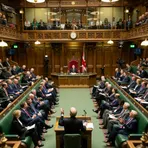
The elected lower house of the United Kingdom Parliament that makes and passes laws
 5
3.3
5
3.3
The elected part of the British Parliament that makes laws and represents the public
 1
3.6
1
3.6
The elected part of the United Kingdom Parliament that makes and approves laws
Surface Forms
Morphology
Etymology
Commons comes from the idea of the common or the community, meaning 'shared by everyone'. So the Commons were the ordinary people who belonged to the whole community, and the House of Commons was their assembly.