

masses
 2
2.3
2
2.3

- noun
- /ˈmæsɪz/
- I always believed, even though the, the, the, the, the masses didn't think I could.
Loading YouTube…
Watch on YouTubeBut the broad masses, what do they think?
- But the broad masses, what do they think?
- And the French masses should convert to deism.
- Is that just the masses, the majority, the many?
- The masses, the unwashed masses that wake up later.
- He was like, back you huddled masses, I'll burn you.
- I think Smashbox really is the OG bringing primers out to the masses kind of a brand.
Examples
-
So what happens is that the masses lose confidence in the currency.
-
But the broad masses, what do they think?
-
There would always be the masses and the poor.
-
Is that just the masses, the majority, the many?
-
And the act of service from the masses is the thing that makes you seen.
-
We have great ones, but the masses typically don't.
-
You didn't really have the masses trying this stuff.
-
So don't judge your success by the masses what they think of you.
-
Give me your tired, your poor, your huddled masses yearning to breathe free.
-
The politician promised to address the needs of the masses rather than just the wealthy elite.
Synonyms
 ∞
1.0
∞
1.0
People in general, not a small private group
 264
1.0
264
1.0
Human beings in a group, for example in a country
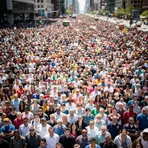 184
3.0
184
3.0
The large group of ordinary people in a society
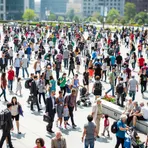 55
5.7
55
5.7
People who live in a country or area
 16
1.3
16
1.3
People who are not rich or powerful
 15
5.6
15
5.6
A large group of ordinary people in a society
 4
9.0
4
9.0
People in a society who are not rich or powerful
 3
8.8
3
8.8
Ordinary people who richer, more powerful people often talk about in a rude way
 1
7.2
1
7.2
Ordinary people who are not nobles or rulers


 1
9.9
1
9.9
Ordinary people often seen as not cultured

Ordinary people in a society
Antonyms

How Numerous

Surface Forms
Morphology
Etymology
Masses comes from an old word massa meaning 'lump' or 'large amount'. Think of a big lump or crowd — the same root is in mass meaning a large amount — so the masses are the large group of 'ordinary people'.