
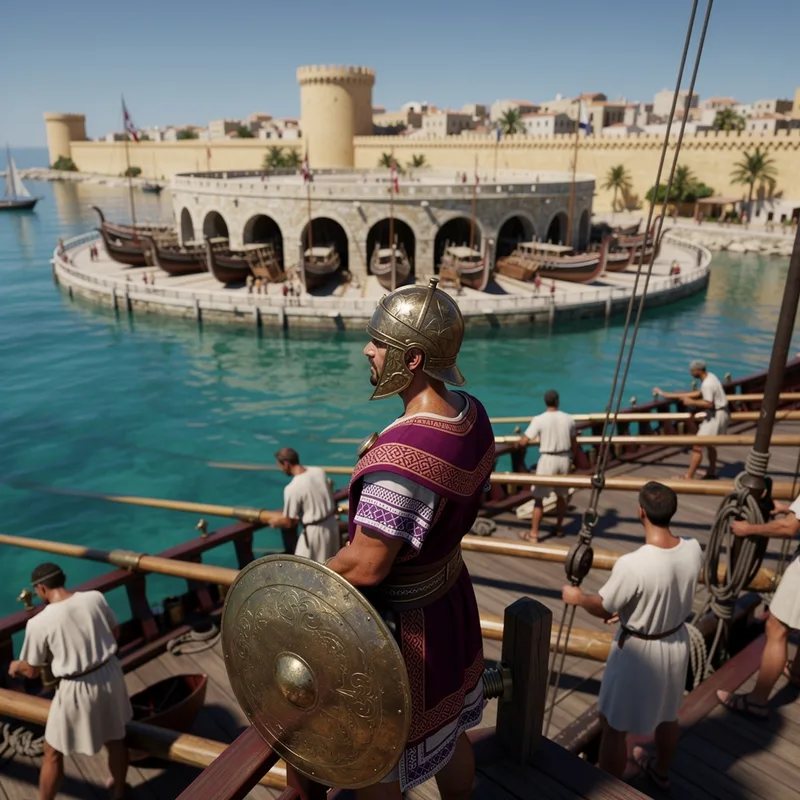
Carthaginian
 2
8.4

- adjective
- /ˌkɑrθəˈdʒɪniən/
- Straight, sleeveless tunics of similar form are recorded from the Carthaginian period in Tunisia.
- Carthaginian army
- Carthaginian crowd
- Carthaginian general
Examples
-
Impressed by the Carthaginian general's daring, he soon began searching out all things Hannibal, from ancient texts to Roman paintings.
Academic text (2007) -
This is the proud history of the Carthaginian Navy.
-
Act one takes place at the Carthaginian court.
Academic text (2000) -
Is the last sentence simply the voice of the Carthaginian crowd?
Academic text (1992) -
Seeing this new bizarre threat, Carthaginian ships now move to assault the flanks.
-
As Dunbabin relates, the "victory was complete, the Carthaginian fleet was burnt, and there was no way of escape for the survivors."
Academic text (2014) -
The Carthaginian soldiers, for example, are the medium through which a gruesome description of the mercenaries' prisoners is related:
Academic text (1992) -
Seeing an opportunity to seize the upper hand in the struggle for Sicily, the Carthaginian leader Hamilcar mobilized his forces.
Academic text (2011) -
The vicissitudes of the Greek-Carthaginian conflict in Sicily were such that by the end of the fifth century BCE, the boot was on the other foot, and Carthaginian armies laid waste to Greek cities in Sicily.
Academic text (2014) -
The Carthaginian people were known for their powerful navy and skilled generals.
Synonyms
 2
9.9
Relating to ancient Carthage, its people, or their language
Surface Forms
Morphology
Etymology
The adjective Carthaginian comes from the name Carthage, built from the old Phoenician parts qart 'city' and hadash 'new'. So Carthaginian describes something connected to that ancient 'new city' or its people.