
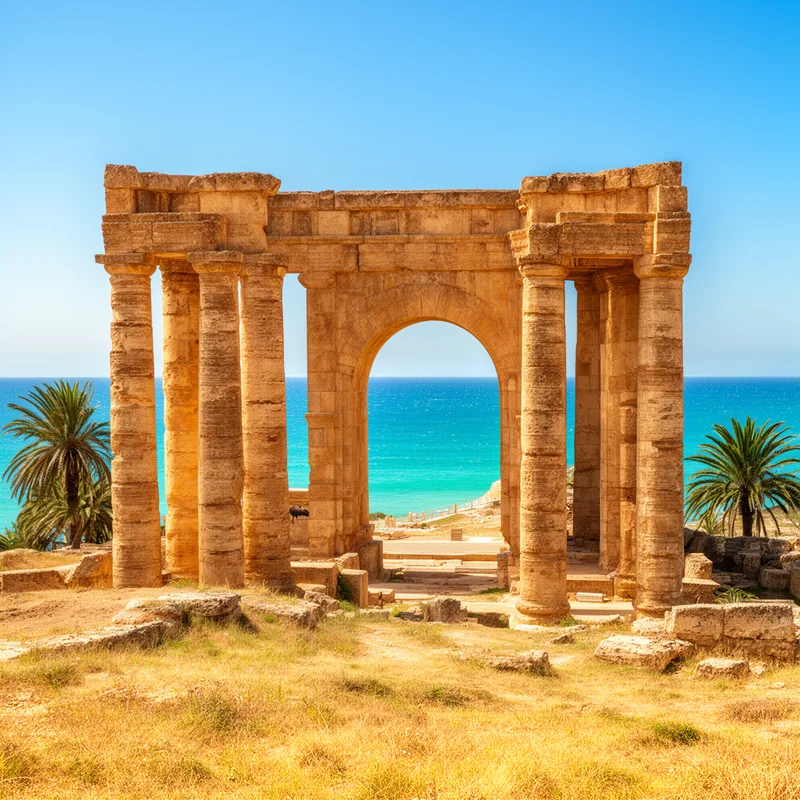
Carthage
 9
7.2

- proper noun
- Historians debate the reasons behind the fall of Carthage in the Punic Wars.
- the destruction of Carthage
- Carthage and Rome
- Dido's Carthage
Loading YouTube…
Watch on YouTubeNow it would be Carthage's turn to strike in Italy.
- Now it would be Carthage's turn to strike in Italy.
- They were tremendously good, fast cavalrymen, a staunch ally of Carthage, but Skipio manages to talk them out of it.
- And so, you know, people have pointed out, we do believe the Punic Wars, which described the battles between Carthage and Rome.
Examples
-
Other mosaics of athletes in North Africa can be found at the Antonine Baths in Carthage.
Academic text (2011) -
When Rome won, it replaced Carthage as the local hegemon.
-
I could find my way through Carthage, were it to rise again.
-
- And you get the battle of Carthage.
-
With this in mind, let's now finally turn to Carthage's wars of expansion.
-
What was it Tacitus said about the Romans at Carthage?
-
Well, as a historian I must remind you that the world hasn't had much trouble from Carthage in the past 2000 years.
-
Carthage finds herself short in timber with which to complete our warships...
-
The author, encountering the ancient tombstone of a Roman soldier who died at Carthage, is reminded of his friend's recent death.
Academic text (1992) -
During the course of Salammbo, Matho walks through the city of Carthage on two occasions in full view of its inhabitants.
Academic text (1992)
Surface Forms
Etymology
Carthage comes from the old Phoenician name Qart-hadasht, made of Qart 'city' and hadasht 'new'. So, Carthage literally means 'new city' and was named when the Phoenicians founded a new town on the North African coast.