

Capsicum frutescens baccatum
- noun
- Specialized
- The fiery hot fruits of the Capsicum frutescens baccatum are prized in many South American cuisines.
Examples
-
Some horticulturists believe that Capsicum frutescens baccatum is the wild ancestor of today’s sweet bell peppers.
-
Farmers in Mexico cultivate Capsicum frutescens baccatum for its spicy fruits.
-
Researchers are studying the unique chemical compounds found in Capsicum frutescens baccatum for their potential health benefits.
-
The Capsicum frutescens baccatum plant thrives in warm climates.
-
The fiery hot fruits of the Capsicum frutescens baccatum are prized in many South American cuisines.
-
Farmers in Mexico cultivate Capsicum frutescens baccatum for its spicy fruits.
-
Some horticulturists believe that Capsicum frutescens baccatum is the wild ancestor of today’s sweet bell peppers.
Synonyms
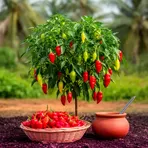
A pepper plant from tropical America that has small very hot red fruits often used in cooking

A small plant from Central America with tiny red fruits that are very hot to eat
How Hot
- Specialized

- Specialized
 1
2.7
1
2.7
 1
3.5
1
3.5
Surface Forms
Morphology
Capsicum + frutescens + baccatum
This is a Latin botanical binomial: while 'Capsicum' signals the pepper genus, the epithets 'frutescens' and 'baccatum' are Latin technical terms not known to an average B1 learner and do not yield a predictable everyday meaning. Species names are lexicalized scientific labels rather than compositional phrases, so the overall meaning (a particular pepper species with specific fruit characteristics) is not derivable from the constituents by typical learners.
Etymology
Capsicum frutescens baccatum comes from Latin words that describe the plant: Capsicum means 'pepper', frutescens means 'small bush', and baccatum means 'small fruit'. This image — a small bush covered in many tiny, very hot red peppers — helps you remember that the name refers to a wild ancestor of today’s peppers.