
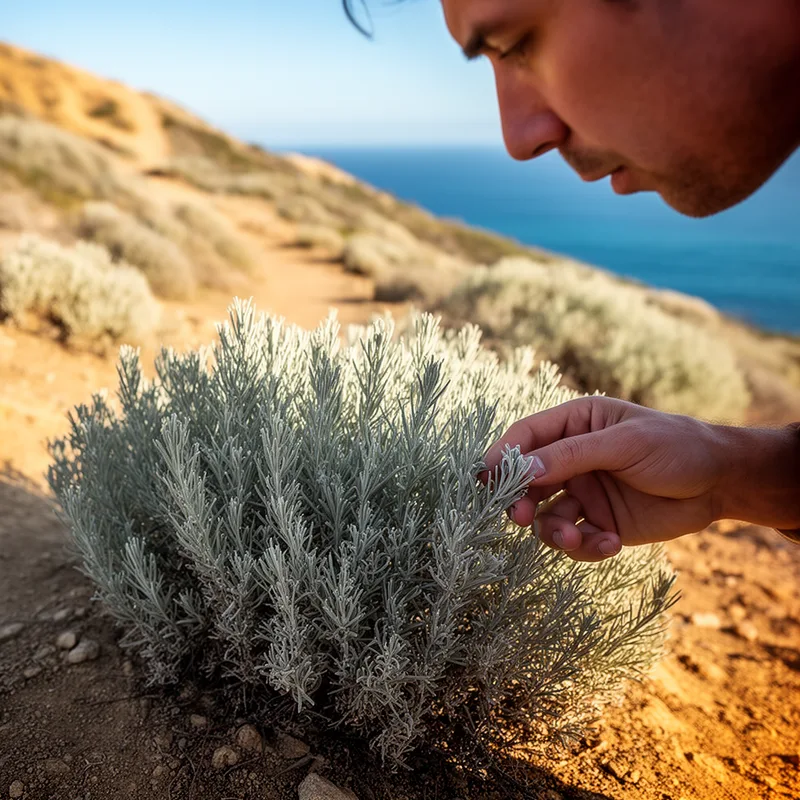
California sagebrush
- noun
- /ˌkælɪˈfɔrnjə ˈseɪdʒˌbrʌʃ/
- US
- The California sagebrush thrives in dry, rocky soil.
Examples
-
The trail was lined with California sagebrush, its scent strong in the dry summer air.
-
Gardeners in coastal areas often plant California sagebrush for its drought tolerance.
-
Hikers sometimes rub the leaves of California sagebrush between their fingers to release its distinctive fragrance.
-
I saw a beautiful California sagebrush by the trail.
-
California sagebrush is often seen thriving in the coastal chaparral regions of California.
-
The landscape was dotted with California sagebrush, creating a distinctive ashy-grey appearance.
-
In the dry areas of California, the hardy sagebrush can withstand extreme heat and drought.
Synonyms
 8
7.7
8
7.7

A woody bush with grey leaves and a strong smell that grows in dry areas

A low grey shrub from California with scented leaves

A low shrub with grey, silvery leaves that grows on dry coastal hills in California
A low bush with pale grey leaves that gives animals shelter and food

A low, many-branched plant with silvery leaves that shelters wildlife
Surface Forms
Morphology
The meaning is directly compositional: a B1 learner who knows 'California' and 'sagebrush' can infer this refers to a sagebrush associated with California (a low, ashy-grey shrub native to that region). This place-name + noun formation is a transparent, cross-linguistically common pattern with no idiomatic or metaphorical shift.
Etymology
California sagebrush probably gets its name from being a low, gray bush that gives a strong 'sage-like' smell and from growing in California. So the word sagebrush means a bush that smells like sage and California tells you where it is found, which helps you remember it is a fragrant shrub in that region.