
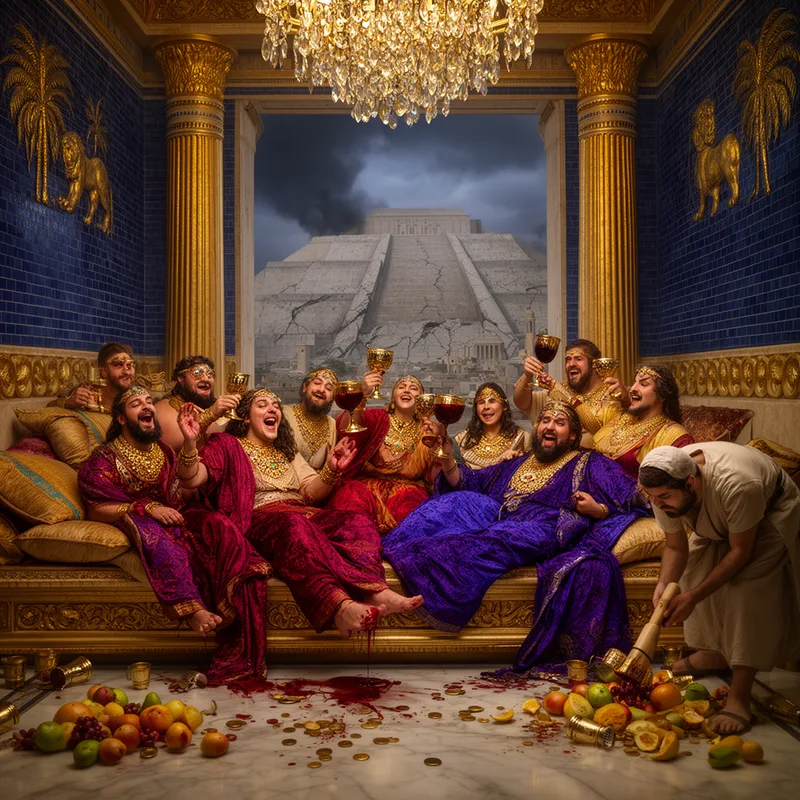
Babylonish
- adjective
- /ˌbæbəˈloʊnɪʃ/
- Archaic
- The palace was decorated in a Babylonish style, with gold and precious stones everywhere.
Examples
-
Critics called the festival's extravagance almost Babylonish in its display of wealth.
-
He warned against adopting Babylonish customs that might lead to moral decline.
-
The Babylonish architecture of the ancient city amazed visitors.
-
Many historians describe the Babylonish culture as one of luxury.
-
The lavish banquet featured a Babylonish display of food and entertainment that left guests in awe.
-
Critics described the lavish lifestyle of the celebrity as dangerously Babylonish, reflecting moral decay.
-
The Babylonish influences in the artwork highlighted themes of excess and opulence.
Synonyms

 2
8.7

Loving fine food, drink and a life of comfort and luxury
 1
9.9
Being very fond of luxury and pleasure
How Luxurious

Surface Forms
Morphology
Etymology
Babylonish comes from Babylon, an old city known for huge palaces and great wealth, and the ending -ish means 'like' or 'related to'. So Babylonish can describe something 'like Babylon' in its luxury or showy riches, and also warn that such wealth may bring moral danger.