
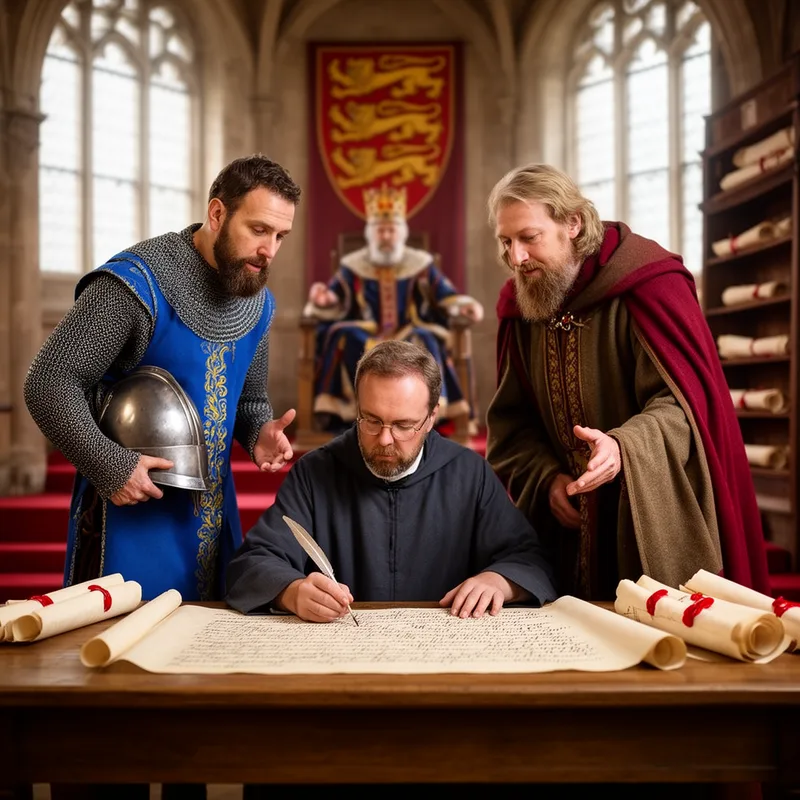
Anglo-Norman
- noun
- /ˈæŋɡloʊˈnɔːrmən/
- Specialized
- At one point, a char says both please and pray, but likely in Saxon, 11th-century English, before Norman French had merged into it to begin Middle English, Anglo-Norman.
Examples
-
The poetry and literature of the 12th century often reflect the influences of Anglo-Norman culture and language.
-
In agreement with the interpretation of the French leprosaria regulae offered in this study, Kealey concludes that these Anglo-Norman rules were designed to assist lepers, not to punish or imprison them.
Academic text (2006) -
Sheela na gigs are most concentrated in the center of the country on churches and castles built by Anglo-Norman lords who used Gaelic masons (Kelly 1994, 12).
Academic text (2000) -
After the Norman Conquest in 1066, the ruling class in England spoke Anglo-Norman as their primary language.
-
Many legal terms in modern English derive from Anglo-Norman used in medieval courts.
Synonyms
A form of Norman French used in England in the Middle Ages by rulers, courts, and writers
A form of French used for law and government in England in the Middle Ages

The French spoken in England in the Middle Ages by rulers and lawyers
Surface Forms
Morphology
Etymology
Anglo-Norman comes from two parts: Anglo- meaning 'English' and Norman for the people from Normandy who brought a form of French to England. So Anglo-Norman names the French used in England after the Norman arrival, which is why many English legal and official words come from it.

