
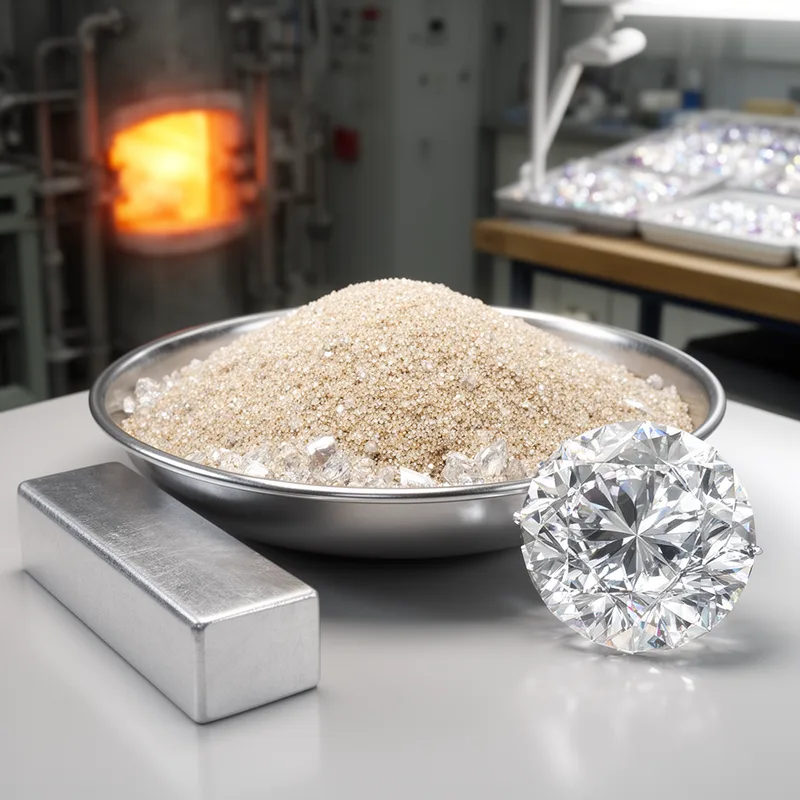
zirconium silicate
- noun
- /zɜrˈkoʊniəm ˈsɪlɪkeɪt/
- Specialized
- Opaque zirconium silicate is valued for its heat resistance in industrial processes.
Examples
-
Most commercial zirconium is extracted from mineral sands rich in zirconium silicate.
-
Jewelry makers prize transparent zirconium silicate for its brilliance and clarity.
-
The zirconium silicate was used in the jewelry industry.
-
Many zirconium silicates are found in igneous rocks.
-
The jeweler showcased a stunning necklace featuring a large piece of zirconium silicate that caught everyone's eye.
-
Many gemstones used in fine jewelry, such as diamonds and zirconium silicate, are valued for their clarity and brilliance.
-
Scientists often study zirconium silicate because of its unique crystal structure and its role in the Earth's crust.
Synonyms

 4
7.5
4
7.5

A hard natural stone with small crystals used as a gem and in furnaces
Surface Forms
Morphology
The noun is a straightforward chemical/compound name combining 'zirconium' (an element) + 'silicate' (a type of mineral), so its meaning — a silicate mineral that contains zirconium — is directly inferable from the parts. This follows standard naming patterns in chemistry and mineralogy (and similar patterns exist in other languages), making it transparent to a learner who knows both constituent words.
Etymology
Zirconium silicate is a name that describes the stone: it combines zirconium, the metal found inside, and silicate, a mineral made from silica which is the same stuff as 'sand'. So the name helps you remember that this mineral is a source of 'zirconium' and often forms clear, gem-like crystals used in jewelry or in industry.