
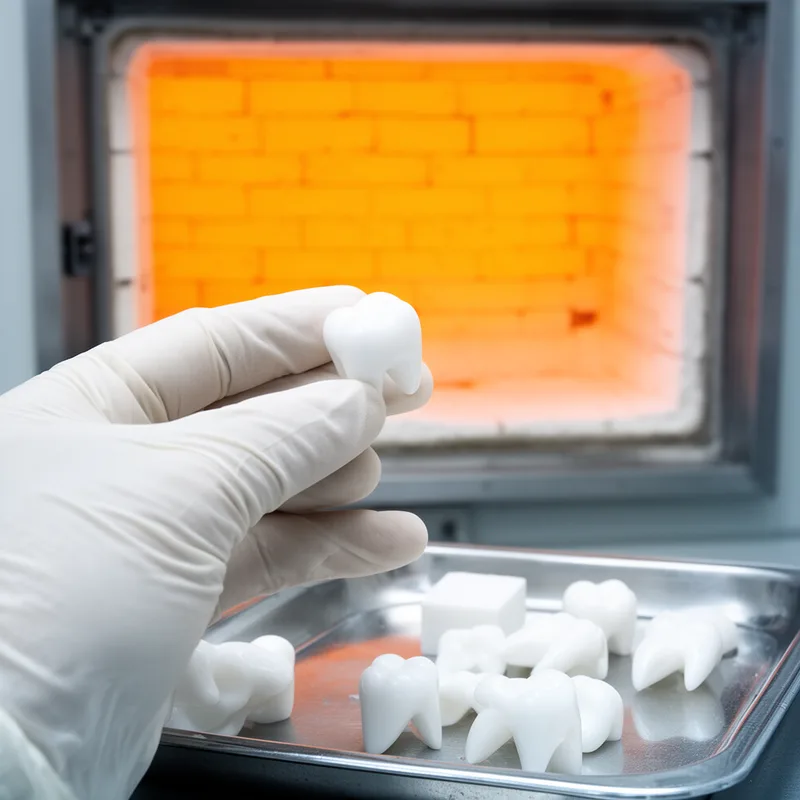
zirconium dioxide
- noun
- /zɜrˈkoʊniəm daɪˈɒksaɪd/
- Specialized
 :
dióxido de circonio
:
dióxido de circonio
- Zirconium dioxide is commonly used in dental ceramics for its strength and resistance to wear.
Examples
-
The high melting point of zirconium dioxide makes it valuable for furnace linings.
-
Scientists are developing new fuel cells using zirconium dioxide as a solid electrolyte.
-
Zirconium dioxide is used in dental ceramics for its strength and durability.
-
The ceramic tile was made from zirconium dioxide.
-
Many dental materials contain zirconium dioxide for strength.
-
The high melting point of zirconium dioxide allows it to be used in high-temperature applications like furnace linings.
-
Zirconium dioxide is often added to glazes to improve their durability and finish.
Synonyms
 5
8.5
5
8.5

A hard white material used instead of diamonds in jewelry and for heat-resistant ceramics
A white strong material that people use to make dental crowns and parts that get very hot
Surface Forms
Morphology
The term is compositional chemical nomenclature: 'zirconium' + 'dioxide' straightforwardly indicates an oxide of zirconium containing two oxygen atoms (ZrO2). This systematic naming pattern is cross-linguistically familiar, so a learner who knows both constituents can infer the basic meaning even if detailed material properties require specialist knowledge.
Etymology
Zirconium dioxide comes from the metal zirconium, named after the gem 'zircon' once called 'gold-like', and dioxide, which means 'two oxygen' atoms joined to it. So the name says it is zirconium plus oxygen, which helps explain why zirconium dioxide is a white, very strong material used in ceramics because it resists heat.