
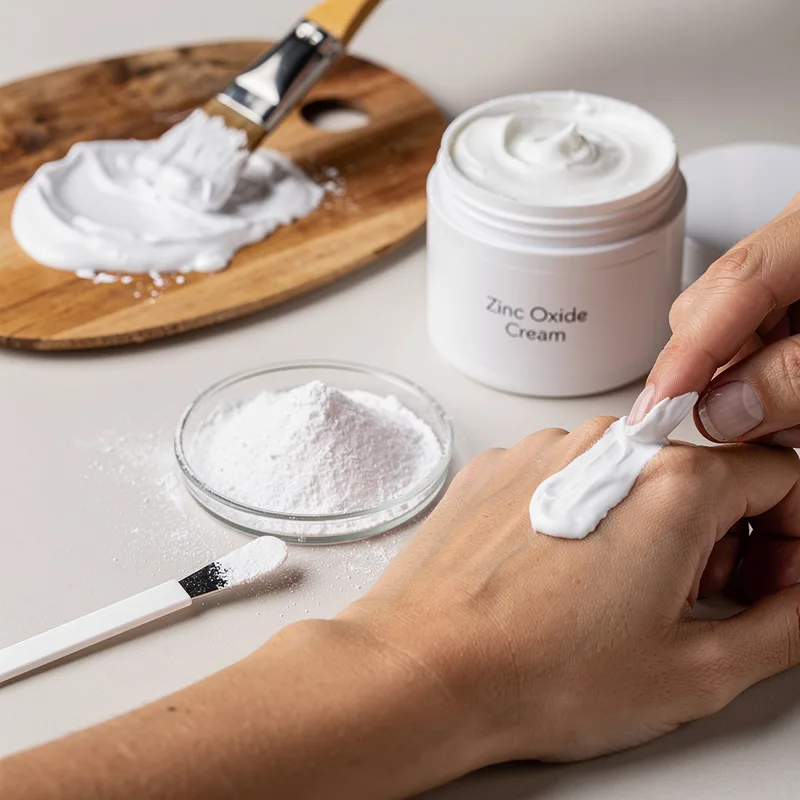
zinc oxide
 2
4.0
2
4.0

- noun
- /zɪŋk ˈaɪksaɪd/
- Cosmetics often include zinc oxide as a natural mineral pigment that helps to enhance skin tone.
- zinc oxide sunscreen
- zinc oxide cream
- ingredients like zinc oxide
Loading YouTube…
Watch on YouTubeInstead of putting the old zinc oxide on, now we have these sprays that you can't see.
- Instead of putting the old zinc oxide on, now we have these sprays that you can't see.
Examples
-
When applying sunscreen, it's important to choose a product that contains zinc oxide for protection against harmful UV rays.
-
But how do I use zinc oxide?
-
It's time to apply zinc oxide
-
One of the most widely used and oldest chemical compounds is zinc oxide.
-
His nose was plastered with zinc oxide, and he was wearing his rubber sandals.
Fiction book (1990) -
Zinc oxide is used in cosmetics, lotions, and sunscreens.
Blog text (20) -
And to help make sure you don't ever find one, when outside, wear zinc oxide sunscreen with an SPF of 30 year-round, and never use a tanning bed.
Blog text (12) -
Physical sunscreens (sunblocks), which may contain zinc oxide or titanium dioxide, function by reflection and scattering and provide protection against a broad spectrum of UVR.
Academic text (1998) -
Many diaper creams contain zinc oxide to soothe and protect a baby's skin from rashes.
Synonyms

A white paint color made from zinc used in paintings

A strong white paint used to make colours lighter in paintings and drawings

A fine white powder used to colour paint and in ointments
A white powder used in paint and skin creams
A white powder used to make white paint, cosmetics, and ointments
Surface Forms
Morphology
The meaning 'a compound of zinc and oxygen' is directly and compositionally derivable from 'zinc' (the metal) combined with 'oxide' (a compound formed with oxygen). This chemical naming pattern is regular and cross-linguistically common, so a B1 learner who knows both constituents would readily understand the MWE.
Etymology
Zinc oxide is a name that tells you what it is: a white powder made when the metal zinc joins with 'oxygen'. That's why this substance is used as a white pigment and in creams and sunscreens to protect skin.