

young heifer
- noun
- /jʌŋ ˈhaɪfər/
- Specialized
- Each spring, the ranch raises a few young heifers to replace the older cows.
Examples
-
Anderson and Clarence V. Hulet, a retired ARS animal scientist, raised lambs with young heifers for 30 to 60 days to get them to bond with cattle.
Academic text (2000) -
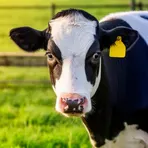
A young heifer grazed peacefully in the green field, enjoying the sunny day.
-
Maybe you could spot a young heifer as a bumblebee-kicker type, but it usually took her three or four years to perfect her style.
Fiction book (2001) -
- Young heifer.
-
The two dogs had a wild streak and chased cattle, and once killed a young heifer, which Coyote then loaded up in the back of his small station wagon and took home and butchered.
Fiction book (1995) -
The farmer bought a young heifer to increase his dairy production.
Synonyms
 28
6.7
28
6.7

A young female cow that has not had a calf
Antonyms

How Mature

Surface Forms
Morphology
The meaning is directly derivable from combining 'young' (not old) with 'heifer' (a young female cow that has not yet borne a calf); in fact 'heifer' already encodes the young/female meaning so the phrase is transparent and even somewhat redundant. This compositional pattern is straightforward and common cross-linguistically, so a B1 learner who knows both constituents will readily understand the MWE.
Etymology
Young heifer comes from farming language: a heifer is a young female cow that has not yet had a calf, and adding young makes you picture a smaller, growing cow that is not yet a mother. So the phrase means 'a young female cow that has not yet had a calf'.