
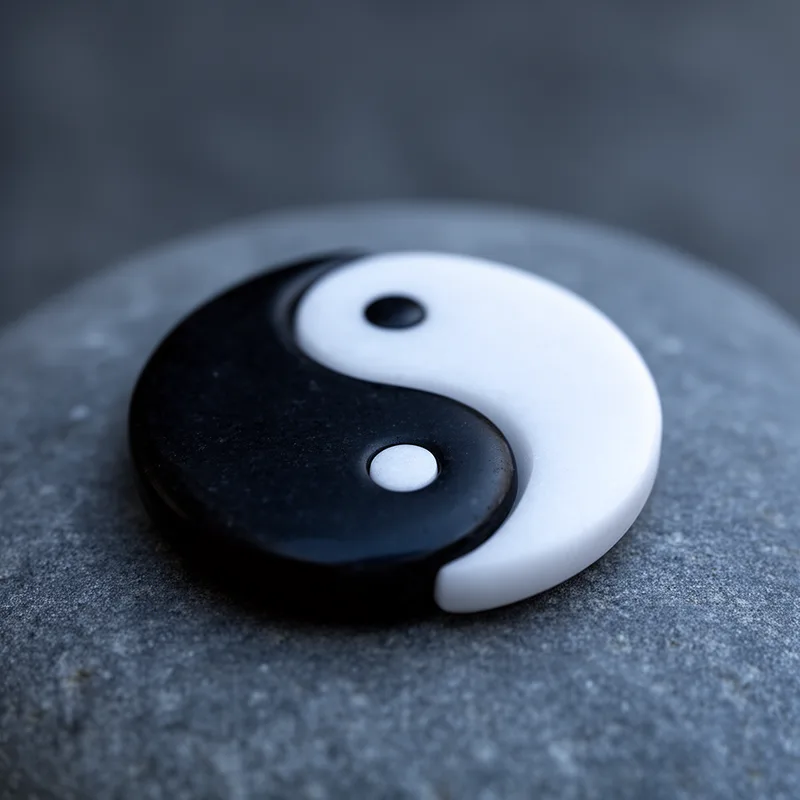
yin
 29
8.9

- noun
- /jɪn/
- Ancient yoga texts assign a yin or yang, feminine or masculine characteristic to each chakra.
- yin and yang
- yin yoga
- the feminine principle of yin
Loading YouTube…
Watch on YouTubeYou know, we, we are your typical yin and Yang.
- You know, we, we are your typical yin and Yang.
- Everything has it's yin and it's Yang and you can't get around it.
- And so you guys get the principle of yin and Yang.
- We're seeing what happens to a society where you have an overload of yin.
- And this is a subject matter that you're kind of tiptoeing around that I was trying to get at in that recent monologue episode, the yin and Yang of change.
- He said I do this yin and Yang, good and evil.
- This is what means yin and Yang cannot be separated.
- This is like perfectly complimentary yin and Yang thing.
- There's both yin and Yang in it coming together.
- It's like a little yin and Yang packaging That's cute.
Examples
-
The yin and the yang are opposite forces... ...yet they exist together in the harmony of a perfect orb.
-
The Taoists talked about it as yin and Yang and broadly speaking, its order and chaos.
-
The Chinese call it yin and yang.
-
In Chinese culture, yin and yang have never been associated with moral values.
Academic text (1993) -
The natural order is one of dynamic balance between yin and yang.
Academic text (1993) -
I'm clearly the yin to your yang.
-
They were the yin and yang to each other.
-
Like yin and yang.
-
Robertson's husband Bob was a laid-back yin to her energetic yang.
Academic text (2002) -
In traditional Chinese philosophy, yin represents the dark and passive forces that complement yang.
Antonyms

Idioms

Compounds

Surface Forms
Etymology
The word yin comes from Chinese and originally means 'shade' or 'dark'. It is the quiet, passive, often 'feminine' half that balances with yang, so yin today refers to calm, inward, or resting energy.