
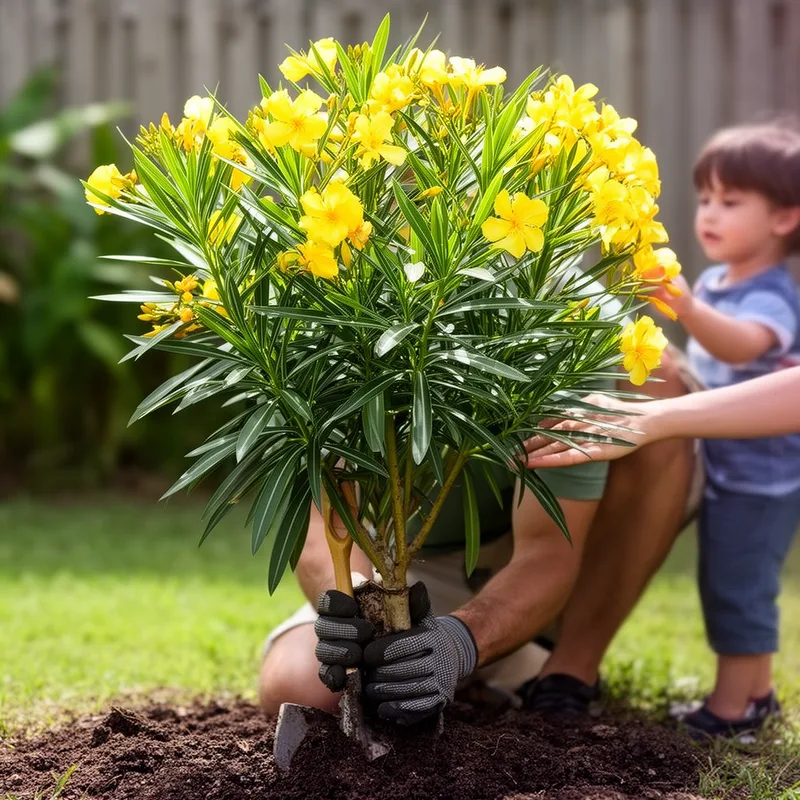
yellow oleander
- noun
- /ˈjɛloʊ oʊˈlɛndər/
- US
- The garden was lined with flowering yellow oleander that added a splash of color.
Examples
-
After learning about its poisonous nature, we removed the yellow oleander from our backyard.
-
Children should never touch the yellow oleander because every part of it is toxic.
-
The yellow oleander blooms beautifully in the summer.
-
Many gardeners love the yellow oleander for its vibrant color.
-
The yellow oleander is native to tropical regions and is known for its beautiful, fragrant flowers.
-
Due to its highly poisonous nature, the yellow oleander should be kept away from children and pets.
-
In some cultures, the yellow oleander is used in traditional medicine, despite its toxic properties.
Synonyms

A small tropical tree with shiny dark leaves, bright yellow to orange flowers, and poisonous parts

A small tropical tree with shiny dark leaves and yellow flowers that is poisonous in all parts
How Poisonous


Surface Forms
Morphology
The phrase is a straightforward color + noun compound: a B1 learner who knows 'yellow' and 'oleander' can infer it denotes the variety of oleander that is yellow (i.e., the shrub with yellow flowers). This compositional pattern is transparent and common across languages, so the full meaning is predictable from the constituents.
Etymology
Yellow oleander is a simple descriptive name: gardeners called it yellow for its bright flowers and oleander for the shrub type. So today yellow oleander means a shrub with bright yellow flowers whose every part is 'poisonous'.