
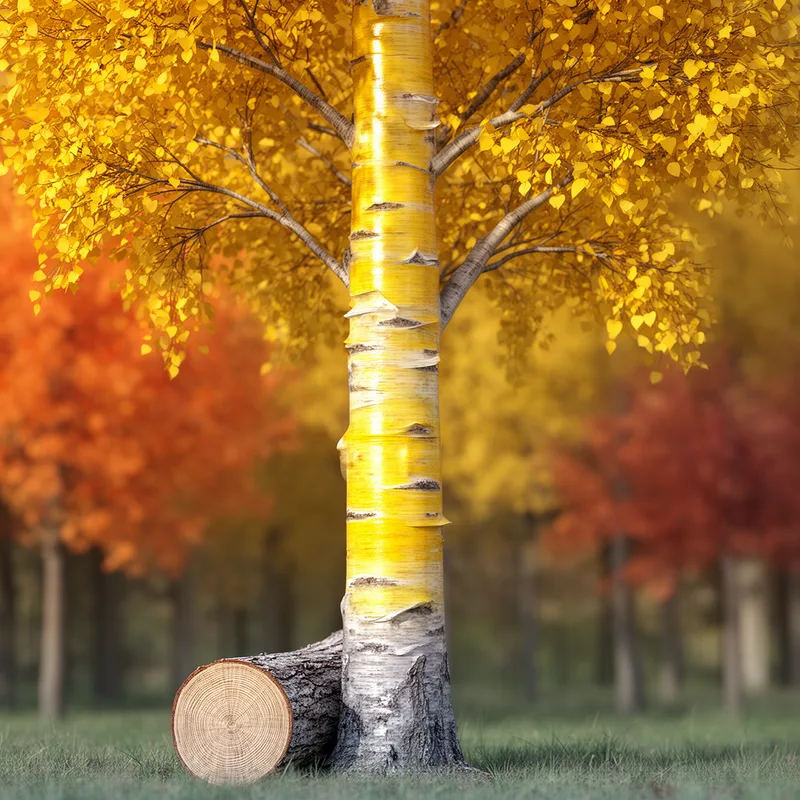
yellow birch
- noun
- /ˈjɛloʊ bɜrʧ/
- US
- Carpenters often prefer yellow birch for furniture due to its strong hardwood and attractive appearance.
Examples
-
The yellow birch is easily recognized by its thin, lustrous yellow bark.
-
The forest is dominated by eastern hemlock (49% relative importance value), black spruce (16%), red maple (15%), yellow birch (9%), and blackgum (5%).
Academic text (2007) -
This is a yellow birch.
-
(The most popular woods for making bats are, in order, ash, maple, and yellow birch.)
Blog text (28) -
Where the canopy has been opened following the fall of a large tree, yellow birch and American beech have become established with a shrub layer of laurel.
Academic text (1990) -
During our hike, we saw a beautiful yellow birch with its distinctive bark shining in the sunlight.
Synonyms
A tree with thin shiny yellow or gray bark that grows in eastern North America
A tree from eastern North America with thin yellow or grey bark
Surface Forms
Morphology
The compound is directly and transparently built from the adjective 'yellow' and the noun 'birch', so a learner who knows both words can infer it refers to a birch tree characterized by yellowish bark or appearance. Color + noun compounds are a common, predictable composition pattern in English and across languages, making this readily understandable at B1.
Etymology
Yellow birch gets its name from how it looks: the word yellow points to the pale, shiny bark and golden leaves in autumn, and birch names the kind of tree. So today yellow birch simply means 'a birch tree with yellow bark'.

