
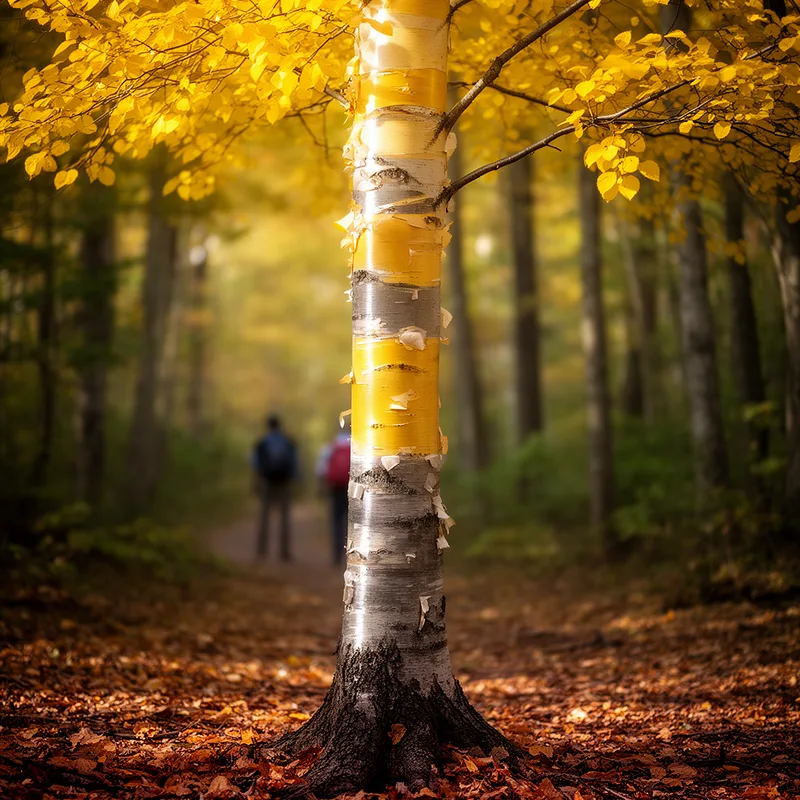
Betula alleghaniensis
- noun
- /bɛˈtuːlə ˌælɪˈɡeɪniˌɛnsɪs/
- Specialized
- Hikers in eastern forests often recognize the Betula alleghaniensis by its peeling yellow bark.
Examples
-
In autumn, the leaves of the Betula alleghaniensis turn a brilliant golden color.
-
The Betula alleghaniensis is often found in moist, well-drained soils.
-
The Betula alleghaniensis is prized for its hard, valuable timber in the furniture industry.
-
I planted a Betula alleghaniensis in my backyard last spring.
-
Hikers in eastern forests often recognize the Betula alleghaniensis by its peeling yellow bark.
-
In autumn, the leaves of the Betula alleghaniensis turn a brilliant golden color.
-
I planted a Betula alleghaniensis in my backyard last spring.
Synonyms
A tree from eastern North America with thin yellow or grey bark

A North American tree with thin shiny yellow or gray bark and strong wood
Surface Forms
Morphology
Betula + alleghaniensis
This is a Linnaean binomial: 'Betula' identifies the birch genus and 'alleghaniensis' is a species epithet (literally 'of the Alleghenies'), so a learner who knows both constituents would infer it denotes a particular kind of birch. Taxonomic binomials are compositionally regular and cross-linguistically predictable, making the meaning (a species of birch) transparently derivable even if the common name 'yellow birch' is not explicit.
Etymology
Betula alleghaniensis comes from Latin words: Betula means 'birch' and alleghaniensis means 'from the Allegheny', the mountain area where this tree grows a lot. So the name tells you it is a birch from that region and helps explain why people also call it the 'yellow birch'.

