
xeromorphic
- adjective
- /ˌzɪəroʊˈmɔrfɪk/
- Specialized
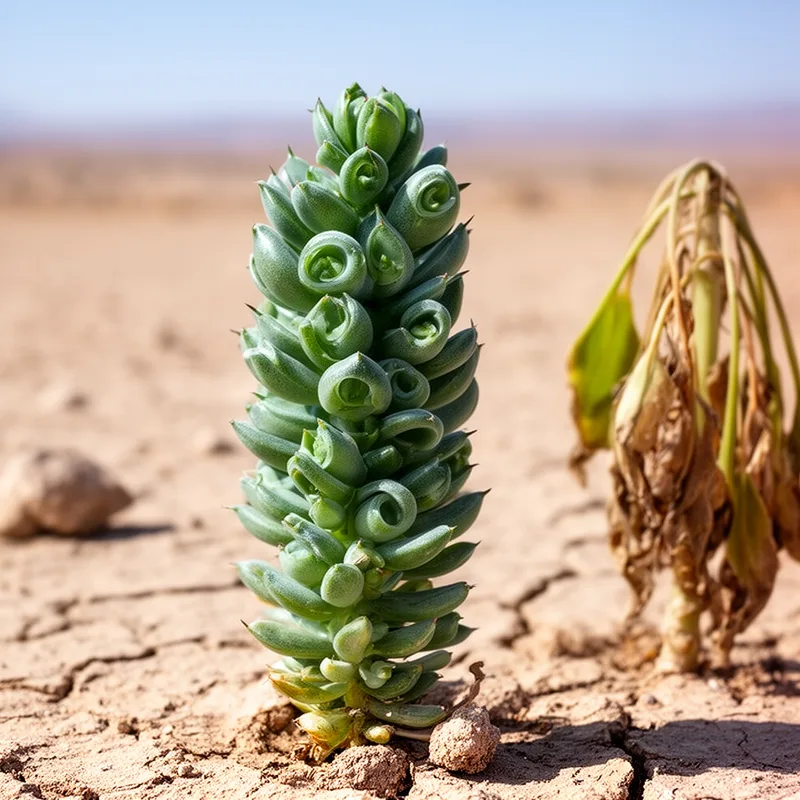
- The leaves of xeromorphic plants are often thick and waxy, minimizing water loss in arid climates.
Examples
-
These range from mixed swamp forest, similar in species composition to dryland rainforests, on the more fertile periphery of the dome, to stunted vegetation with xeromorphic features in the dry center.
Academic text (2011) -
In the interior are groves of low deciduous forests with xeromorphic shrubs.
Academic text (1993) -
Sand-dune communities are highly xeromorphic, halophytic, rich in endemics, and generally composed of pantropical and pioneer species typical of the Caribbean region (Sauer 1967).
Academic text (1993) -
Cacti are well-known for their xeromorphic features, which help them thrive in desert environments.
-
During droughts, xeromorphic adaptations in certain plants allow them to retain moisture and survive.
Synonyms


 1
9.9
1
9.9
Very dry and needing little water, like a desert

A plant that lives in very dry places and stores water
How Drought-Adapted

Surface Forms
Morphology
xeromorphic = xeromorph (semi-transparent) = xero + morph + ic
The formation xeromorph + -ic is regular, but the combining form 'xero-' and the technical term 'xeromorph' are specialised and may be unfamiliar to general learners.
Etymology
Xeromorphic comes from Greek parts xero- meaning 'dry' and -morphic meaning 'shape' or 'form'. So, xeromorphic describes plant parts shaped to save water and help a plant survive in dry places.