
xeroderma pigmentosum


 1
9.9
- noun
- /ˌzɪəroʊˈdɜrmə pɪɡˈmɛntoʊsəm/
- Specialized
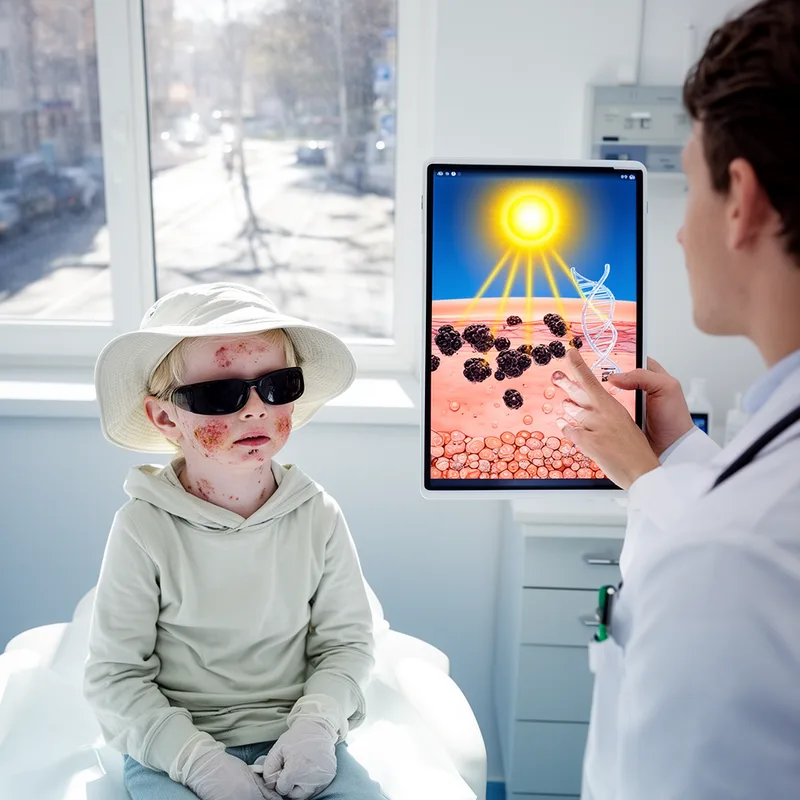
- Children with xeroderma pigmentosum must avoid sunlight to prevent severe skin damage.
Examples
-
The genetic diagnosis confirmed that he had xeroderma pigmentosum after multiple unusual sunburns.
-
Researchers are studying new treatments for xeroderma pigmentosum to reduce the risk of skin cancer.
-
Children with xeroderma pigmentosum must avoid sunlight.
-
The diagnosis of xeroderma pigmentosum can be life-changing.
-
Children with xeroderma pigmentosum must avoid sunlight to prevent severe skin damage.
-
Researchers are studying new treatments for xeroderma pigmentosum to reduce the risk of skin cancer.
-
The genetic diagnosis confirmed that he had xeroderma pigmentosum after multiple unusual sunburns.
Surface Forms
Morphology
xeroderma + pigmentosum
This is a specialized Latinized medical diagnosis whose overall meaning (a genetic disorder causing extreme UV sensitivity and high skin-cancer risk) is not compositionally predictable from the parts. Even if a learner knew 'xeroderma' as dry skin and somehow parsed 'pigmentosum' as relating to pigment, they would not infer the specific pathological mechanism or cancer risk; the term is technical and language-specific rather than transparently descriptive to a B1 learner.
Etymology
Xeroderma pigmentosum comes from old Greek and Latin words: xero- meaning 'dry', derma meaning 'skin', and pigmentosum from 'pigment' meaning 'colour'. This picture of dry, changed skin after being in the sun helps you remember that the condition makes the skin very sensitive to sunlight and raises the chance of skin cancer.