
xanthan
 2
5.6
2
5.6

- noun
- /ˈzænθən/
- Specialized
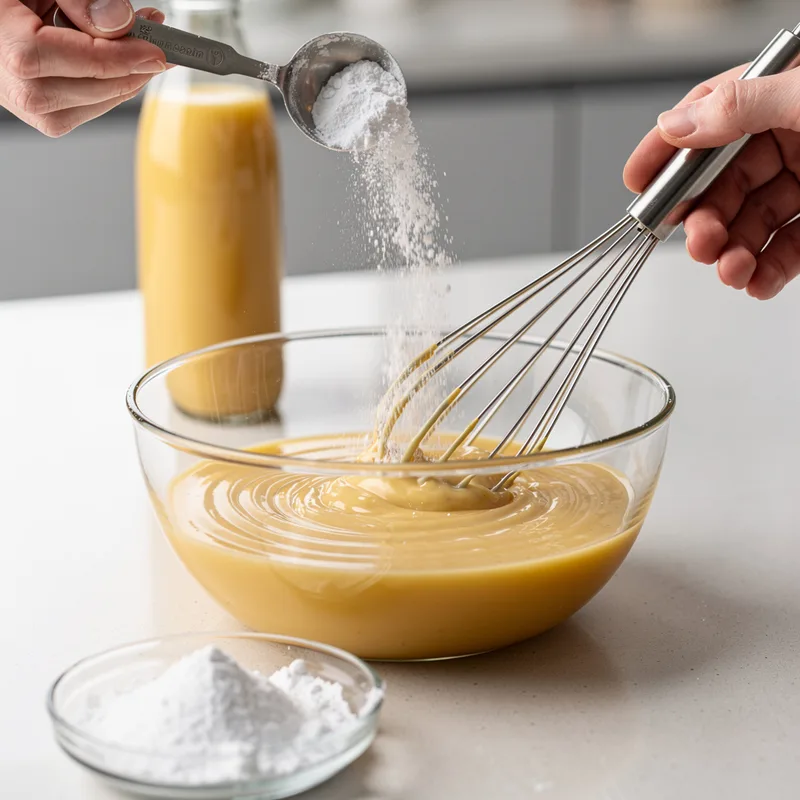
- For a smoother texture in sauces, many chefs use xanthan gum as a stabilizer.
- xanthan gum
Loading YouTube…
Watch on YouTubeThey're spaghetti noodles in particular are a OK, it's chickpeas, tapioca and xanthan gum.
- They're spaghetti noodles in particular are a OK, it's chickpeas, tapioca and xanthan gum.
Examples
-
The gluten-free recipe requires xanthan gum to help bind the ingredients.
-
Xanthan gum, discovered by ARS in the 1960s, is another food ingredient that appears in a whole host of consumer products.
Academic text (2002) -
Do they have xanthan gum in them?
Blog text (19) -
What will be the development trend of the xanthan gum industry in China?
Blog text (4) -
What are your thoughts on xanthan gum?
Blog text (17) -
So what is the latest consumption pattern of xanthan gum in China?
Blog text (4) -
I regularly use xanthan gum in my gluten-free recipes.
Blog text (17) -
The analysis of xanthan gum consumption in the food and beverage industry will be more detailed and precise in this new addition.
Blog text (4) -
Hydrocolloids such as carrageenan, konjac, and xanthan gum have contributed as fat replacers because of their very low caloric content, inexpensive cost, and versatile applications as they can be added directly or prepared as fat analogues.
Academic text (2015) -
To make the dish creamier, I added xanthan gum as a thickener.
How Thick
- Specialized

 1
8.6
1
8.6

- Specialized
2
5.6
- Specialized
3
6.8
- Specialized
10
3.2
9
3.7
∞
1.0
Surface Forms
Etymology
Xanthan comes from the name of a bacterium, Xanthomonas, whose first part xanth- means 'yellow'. That bacterium makes a slimy substance that thickens liquids, so xanthan is the thickener people add to foods and other products to give them a smooth, stable texture.