

word deafness
- noun
- /wɜrd ˈdɛf.nəs/
- Specialized
- Although her hearing was normal, she was diagnosed with word deafness after struggling to follow conversations.
Examples
-
His word deafness makes it hard for him to follow conversations.
-
Many people with word deafness struggle in noisy environments.
-
Word deafness can result from damage to specific areas of the brain responsible for language processing.
-
After his stroke, the patient developed word deafness and could no longer comprehend speech.
-
After his stroke, the patient developed word deafness and could no longer comprehend speech.
-
Although her hearing was normal, she was diagnosed with word deafness after struggling to follow conversations.
-
His word deafness makes it hard for him to understand what people say.
Synonyms

 1
9.2
1
9.2

Able to speak easily but say words that do not make sense and cannot understand speech or writing


 1
9.9
1
9.9
A condition that makes it hard to speak or understand speech after brain damage

A condition in which a person cannot understand speech despite normal hearing
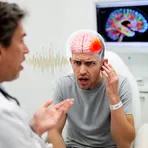
A condition that makes it hard to understand spoken language despite normal hearing due to brain damage

A condition where a person can hear sounds but cannot understand spoken words

A condition where a person speaks in long sentences that do not make sense and cannot understand speech or writing

Talking that sounds normal but uses wrong words and makes understanding language hard
Surface Forms
Morphology
word + deafness
The compound 'word deafness' can be parsed as 'deafness for words', so a B1 learner who knows 'word' and 'deafness' would likely infer a problem hearing or understanding spoken words. However, it is a technical medical term whose precise clinical sense (difficulty understanding speech despite normal peripheral hearing) and the nuance that it is not ordinary hearing loss are not fully predictable from the parts, so full comprehension requires prior exposure.
Etymology
The term word deafness creates a simple image: the deafness part means being 'deaf' and the word part shows what is missed: words, even though the ears hear sounds. That's why it means 'difficulty understanding spoken language'.