

woolly plant louse
- noun
- /ˈwʊli plænt laʊs/
- Clusters of woolly plant lice look like fluffy white spots on the branches and leaves.
Examples
-
Gardeners often mistake the woolly plant louse for mold due to its cotton-like wax secretion.
-
The woolly plant louse can cause severe damage to apple orchards if not controlled.
-
The woolly plant louse infested my garden last summer.
-
I found a woolly plant louse on the rose bush.
-
Clusters of woolly plant lice look like fluffy white spots on the branches and leaves.
-
Gardeners often mistake the woolly plant louse for mold due to its cotton-like wax secretion.
-
The woolly plant louse can cause severe damage to apple orchards if not controlled.
Synonyms
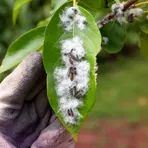
A small insect that makes a white, cotton-like covering on plants

A small insect like an aphid that sucks juices from plants

A small insect that sucks sap from plants
Surface Forms
Morphology
The noun phrase is fully descriptive: 'woolly' (covered in wool-like fluff) + 'plant' + 'louse' (a sap-sucking insect) directly yields the meaning of a wool-like insect that infests plants. This is a straightforward compound following ordinary English composition patterns (not idiomatic or metaphorical), so a B1 learner who knows the constituents can infer the meaning.
Etymology
Woolly plant louse comes from how the insect looks: it makes a white, cotton-like wax so it looks woolly, it lives on plants, and 'louse' is a word for a small harmful insect. That is why the name describes a small, fluffy-looking insect that is a 'pest' on plants.

