
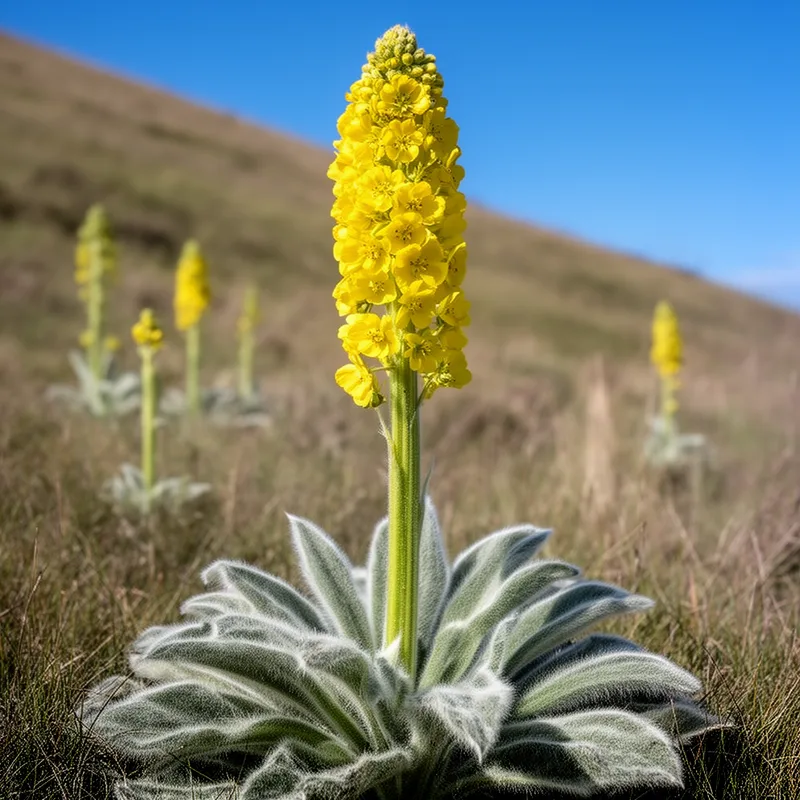
woolly mullein
- noun
- /ˈwʊli ˈmʌlɪn/
- The hillside was dotted with woolly mullein, their yellow flowers standing tall among the grass.
Examples
-
Ancient Romans once used woolly mullein stalks as torches in ceremonial processions.
-
Gardeners sometimes plant woolly mullein for its unique texture and striking appearance.
-
The woolly mullein grows tall in the summer.
-
Have you seen a woolly mullein before?
-
Ancient Romans once used woolly mullein stalks as torches in ceremonial processions.
-
In ancient Greece, woolly mullein was valued for its tall stature and bright yellow flowers during funerals.
-
Farmers appreciated the woolly mullein for its ability to thrive in poor soil and its striking floral display.
Synonyms


 1
9.9
1
9.9
A tall plant with soft, woolly leaves and spikes of yellow flowers
 1
9.9
1
9.9
A group of rough plants with woolly leaves and tall flower spikes often called mulleins

A tall plant with soft, hairy leaves and long spikes of yellow flowers
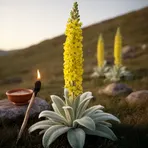
A tall plant with soft woolly leaves and spikes of yellow flowers used long ago as torches
A tall plant with soft woolly leaves and yellow flower spikes
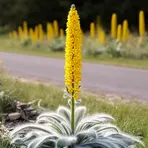
A tall plant with hairy leaves and tall spikes of yellow flowers
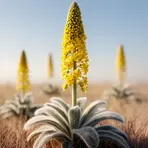
A tall plant with soft, hairy leaves and yellow flowers
How Woolly

Surface Forms
Morphology
This is a straightforward adjective+noun combination: 'woolly' describes texture and 'mullein' names a plant, so the meaning (a mullein plant with woolly leaves) is directly derivable from the parts. The compositional pattern is common cross-linguistically and would be clear to a B1 learner who knows both constituent words, even if 'mullein' is a less frequent botanical term.
Etymology
Woolly mullein gets its name from its soft, fuzzy leaves, the 'woolly' part, and from the tall mullein stalks. People once used those stalks as 'torches' in ceremonies, so the name describes the plant and helps you remember it.