
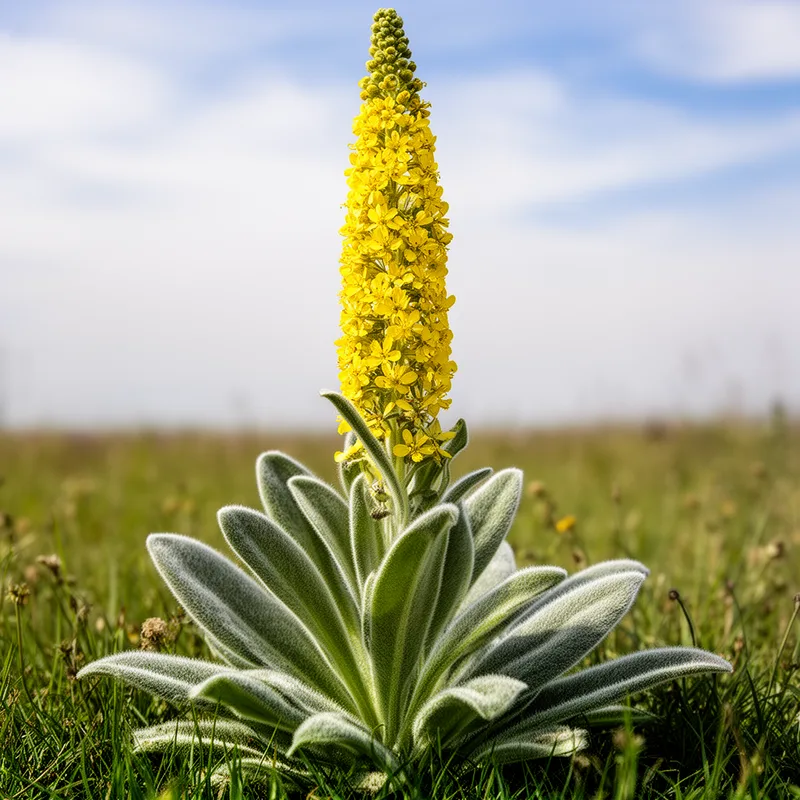
common mullein
- noun
- /ˈkɒmən ˈmʌlɪn/
- The ancient Greeks used common mullein to create torches for lighting their homes.
Examples
-
Common mullein, an Old World biennial that grows profusely on dry, sandy soils of overgrazed pastures, was the original fish poison, barbasco, of antiquity.
Academic text (1991) -
The abundance of common mullein today in eastern North America awaits use as a natural substance in pest control.
Academic text (1991) -
During the summer, common mullein blooms bright yellow flowers that attract many pollinators.
-
Farmers sometimes plant common mullein in their fields, as it helps improve soil health.
Synonyms


 1
9.9
1
9.9
A tall plant with soft, woolly leaves and spikes of yellow flowers
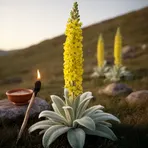
A tall plant with soft woolly leaves and spikes of yellow flowers used long ago as torches

A tall plant with soft, hairy leaves and long spikes of yellow flowers
A tall plant with hairy leaves and tall spikes of yellow flowers
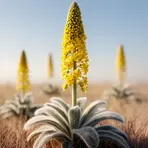
A tall plant with soft, hairy leaves and yellow flowers
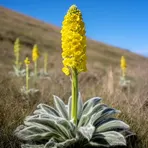
A tall plant with soft hairy leaves and bright yellow flowers
Surface Forms
Morphology
The phrase is fully compositional: 'mullein' names a plant and 'common' means typical or widespread, so 'common mullein' simply denotes the widespread/typical variety of that plant. This adjective + noun pattern follows normal English composition and is cross-linguistically transparent, so a B1 learner who knows both constituents would understand the meaning.
Etymology
Common mullein is a plant with tall, dry stalks and soft, woolly leaves. Ancient Greeks and Romans used mullein stalks as 'torches' to give 'light', so the strong picture of a burning stalk helps explain why common mullein means that tall, woolly plant you can spot in fields today.