
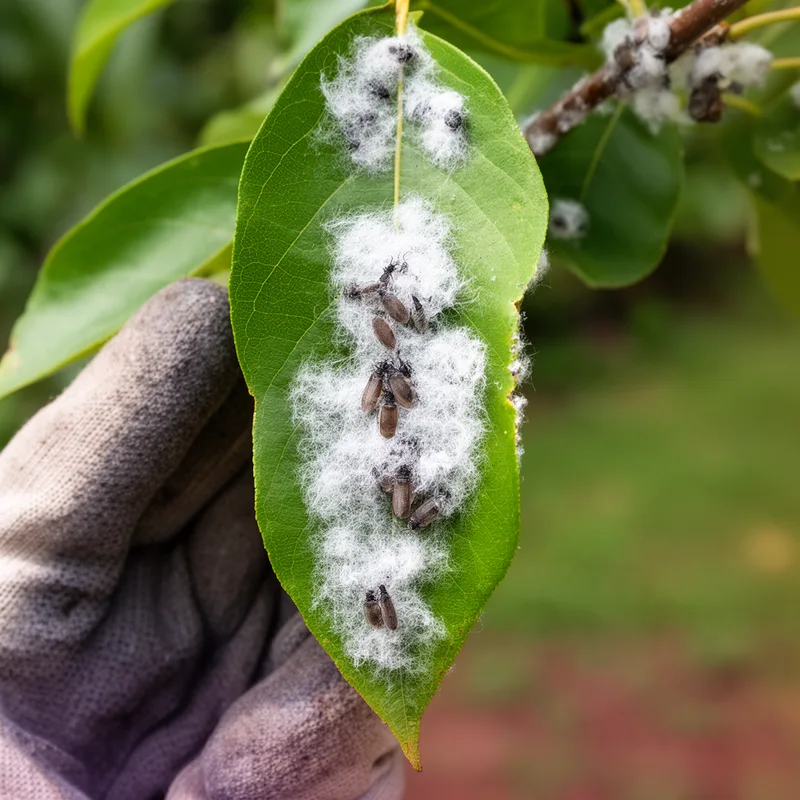
woolly aphid
- noun
- /ˈwʊli ˈeɪfɪd/
- Specialized
- The rose bushes were covered with woolly aphids that looked like tufts of cotton.
Examples
-
Gardeners often struggle to control woolly aphid infestations on their fruit trees.
-
A thick coating produced by woolly aphids can make leaves look unusually white and fuzzy.
-
Look at that woolly aphid!
-
The woolly aphid infests many garden plants.
-
The rose bushes were covered with woolly aphids that looked like tufts of cotton.
-
Gardeners often struggle to control woolly aphid infestations on their fruit trees.
-
A thick coating produced by woolly aphids can make leaves look unusually white and fuzzy.
Synonyms
 14
5.6
14
5.6

A small insect that sucks sap from plants and often damages them

A small insect that looks like white cotton on plants and sucks their juice

An insect that makes a wax layer on its body to protect itself
Surface Forms
Morphology
The noun phrase is compositionally transparent: 'woolly' describes a fluffy, wool-like appearance and 'aphid' names the sap-sucking insect, so the compound denotes an aphid that appears woolly. This follows a straightforward adjective+noun naming pattern with no idiomatic shift, so a B1 learner who knows both words should be able to infer the meaning.
Etymology
Woolly aphid comes from how the insect looks: tiny insects called aphids cover themselves in a white, cotton-like wax that makes them look woolly. So today woolly aphid means 'a small insect that makes a white, cotton-like coat and lives on plants'.